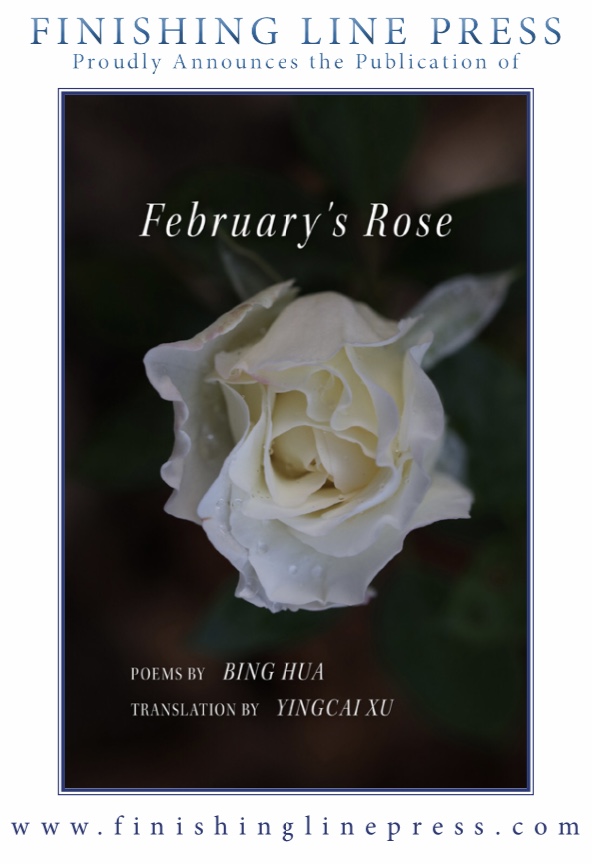
迈克尔•埃斯库巴斯:诗人冰花像狄金森一样,作品充满了奇迹 ——美国著名评论家迈克尔•埃斯库巴斯Michael Escoubas评冰花《二月玫瑰》/February’s Rose 备受敬爱的20世纪初著名小说家威拉•凯瑟 (1873-1947) 曾写道: “许多人似乎以为艺术是融入生活的一种奢侈品。艺术源于生活本身的组成。艺术必须源于丰富多彩的生活。” 虽然凯瑟是小说家,冰花是诗人,但我感觉他们作品有异曲同工之妙。两位都深知艺术的目的。两者都秉持生活和艺术不可分割的理念。两人都懂爱。两人都知道失望。两人都知道失去以及失而复得后变得更强大、更美好的喜悦。 徐英才极高水平出色翻译的《二月玫瑰》,以人为本描绘生活。诗人本能地捕捉到爱的讽刺。她以流畅、简洁的方式做到这一点。诗句结尾不用标点符号,让读者可以零距离接触诗人的思绪和灵魂。她显得真诚而平易近人。她的诗传递出自省、恐惧未来、和人性胜利的喜悦之间的张力。 《二月玫瑰》分七个部分,融合季节性主题与相应的内心季节变化。分别是:I.向日葵,II.二月玫瑰,III.那年夏天,IV. 荷的心事, V. 绝不投资爱情, VI.双面扇,和VII.月光围巾。各个章节标题都妙趣横生。 请看城市、自然和爱在《寂静的心声》一诗中如何交融: 繁忙的现代街道上 沐浴物欲的晨曦 黑色的长发 当寂静的心声 你不想错过诗人如何利用“寂静的声音”来创造一个难忘的爱情时刻。 爱是冰花诗里最重要的主题。她的诗几乎涵盖月月季季,彰显出外部自然世界与(通常是看不见的)人性深处之间的契合。 冰花的拟人化天才在《六月风情》中得到体现: 蓝天离我越来越近 六月的花园 六月的海洋 一叶白帆驶向远方 临风的岸上 这首诗里,诗人在与大自然恋爱,唤起一种情感上的满足,充盈了她沉思的心。从来没有人对生命的挑战做出容易的解答,“两棵椰子树手挽着手/解不开六月的风情。” 《春天》这首诗让我们想起艾米莉•狄金森: 不知春天用什么扇子 只看到 哦 春天 如此娇媚 对诗人冰花来说,爱超越延伸了人类的爱。她被爱包围,被世界的美丽所吸引,像狄金森一样,她的作品充满了奇迹。 与诗集里的章节标题一样,她的诗题也引人入胜:如“来吧”、“为什么”、“如雪的思念”、“鱼笑了”、“牙齿”、“灰尘”和“月光围巾”等。 在整个《二月玫瑰》中,冰花的诗歌展现了精湛的技艺、成熟和鲜明的意向。 所有这些都在《如果我是风》中得到了极好的展现: 如果我是风 如果我是风 是的,威拉•凯瑟会感到骄傲;因为,像凯瑟一样,冰花的诗艺源于丰富多彩的生活。 来自: http://quillandparchment.com/archives/August2022/book4.html)
Reviewed by Michael Escoubas The esteemed early 20th century novelist Willa Cather (1873-1947) once wrote: “Many people seem to think that art is a luxury to be imported and tacked on to life. Art springs out of the very stuff that life is made of. Art must spring out of the fulness and richness of life.” Although Cather was a novelist and Bing Hua a poet, I sense an affinity between them. Both understand the purpose of art. Both instill the idea that life and art cannot be separated. Both know love. Both know disappointment. Both know loss and the joy of recovering stronger and better in the face of loss. February’s Rose, superbly translated by Yingcai Xu, portrays life with a strong sense of where people live. Intuitively, the poet captures the ironies of love. She does this in smooth, economical lines. With no end-line punctuation, readers enjoy close access to the poet’s mind and heart. She comes across as genuine and accessible. Her poems resonate with tensions of self-understanding; fears of what to do next, and joys triumphant in the human spirit. Organized into seven sections, February’s Rose, combines seasonal themes with cor-responding seasons of the heart. The sections include: I. The Sunflower, II. February’s Rose, III. That Summer, IV. The Lotus’ Obsession, V. Never Invest in Love, VI. A Hand Fan, and VII. The Scarf of the Moonlight. Even the section titles evoke interest. Notice the confluence of city, nature and love in this excerpt from “The Sound of Silence”: On the busy modern street Bathing in the morning rays of materials Long black hair When the sound of silence You won’t want to miss how the poet uses the sound of silence to create a memorable moment of love. Love is Bing Hua’s overriding theme. She includes virtually every month and season of the year showing connections between the outer world of nature and the inner (and often invisible) world of human nature. Bing Hua’s talent for personification is displayed in “The Amorous Knot of June”: Closer and closer, the blue sky In June’s garden June’s ocean A white sail glides to the distance On the wind-touched riverbank Here, the poet is in love with nature. She invokes a kind of emotional completion, which is satisfying to her contemplative heart. Never one to provide an easy answer to life’s challenges, “Two coconut palms stand hand in hand / But cannot tie the amorous knot.” The poem “Spring” brings Emily Dickinson to mind: I wonder what type of fan spring uses I only see O, spring, you are so sweet and charming Love, for this poet, extends beyond human love. Bing Hua feels encircled by love. Possessed by the world’s beauty, and like Dickinson, her work is punctuated with wonder. As with her section titles, her poem titles attract interest: “Come on Over,” “Why,” “My Longing for You Is Like Snow,” “Fish Begin to Chuckle,” “Teeth,” “Dust,” and “The Scarf of Moonlight,” to name but a few. Throughout February’s Rose, Bing Hua’s poetry exhibits craftsmanship, maturity and clarity of purpose. All of this is superbly illustrated in “If I Were Wind”: If I were wind Yes, Willa Cather would be proud; because, like Cather, Bing Hua’s art springs from the fulness and richness of life. 迈克尔•埃斯库巴斯Michael Escoubas 迈克尔•埃斯库巴斯 迈克尔•埃斯库巴斯是在美国有 21 年历史的文学和文化艺术网上诗歌期刊《鹅毛笔和羊皮纸》/ Quill and Parchment 的特约诗人、高级编辑和书评家。 迈克尔以大器晚成著称, 66 岁从印刷行业退休(2013 年)后他才为出版写作。在此之前,迈克尔阅读、学习和自学诗歌约 25 年。 他已出版五部诗集。其中包括:Images: A Collection of Ekphrastic Poems/《意象:埃克弗拉斯诗集》(2021), Light Comes Softly/《轻柔的光》,和ekphrastic poems/《抒情诗》, Monet in Poetry and Paint /《诗画莫奈》两部诗集(2018年),及Steve Henderson in poetry and Paint /《史蒂夫•亨德森的诗歌和绘画》(2019年),还出版有关于新冠肺炎疫情的奉献诗集Little Book of Devotions: Poems that Connect Nature, God and Man /《奉献小书:连接自然、上帝和人的诗》(2020年)。 迈克尔的诗歌曾多次获得诗歌大奖,并被编入多种选集。他出版的著作均可见于亚马逊。
Michael Escoubas serves as contributing poet, senior editor and book reviewer for Quill and Parchment, a 21-year-old literary and cultural arts online poetry journal. Regarded as something of a late bloomer, Michael did not write for publication until after his retirement from a career in the printing industry (2013), at age 66. Prior to this Michael read, studied, and educated himself in poetry for approximately 25 years. He is the author of five collections of poetry. These include: Images: A Collection of Ekphrastic Poems, (2021). He has also published one chapbook, Light Comes Softly, two other collections of ekphrastic poems, Monet in Poetry and Paint (2018), Steve Henderson in poetry and Paint (2019), and one book of devotional poems based on the Covid-19 Pandemic, Little Book of Devotions: Poems that Connect Nature, God and Man (2020). Winner of numerous poetry awards, Michael’s poems have been widely anthologized. His publications are available via Amazon.
|
Powered by Discuz! X3.4
© 2001-2017 Comsenz Inc.