天涯小站 2.0

 找回密码
 注册
搜索
楼主: 语婷

[修理] 语婷的空屋子和老房子(PG53)

  [复制链接]
 楼主| 发表于 2013-12-8 04:01:37 | 显示全部楼层
本帖最后由 语婷 于 2013-12-8 01:16 AM 编辑

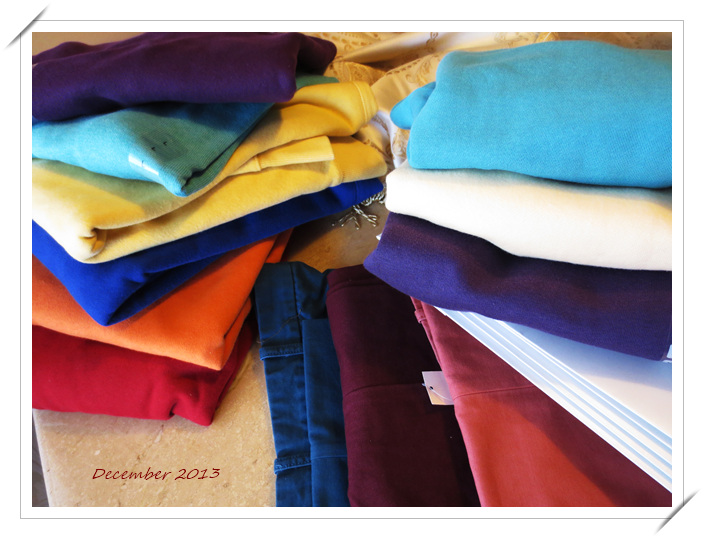
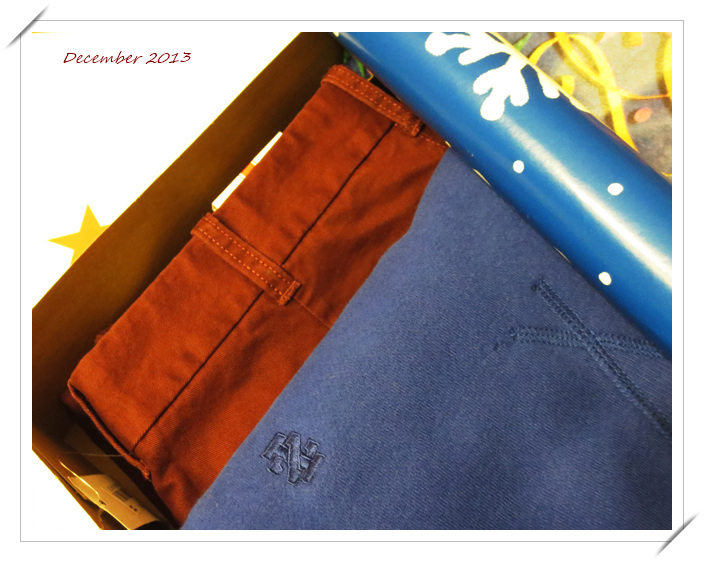
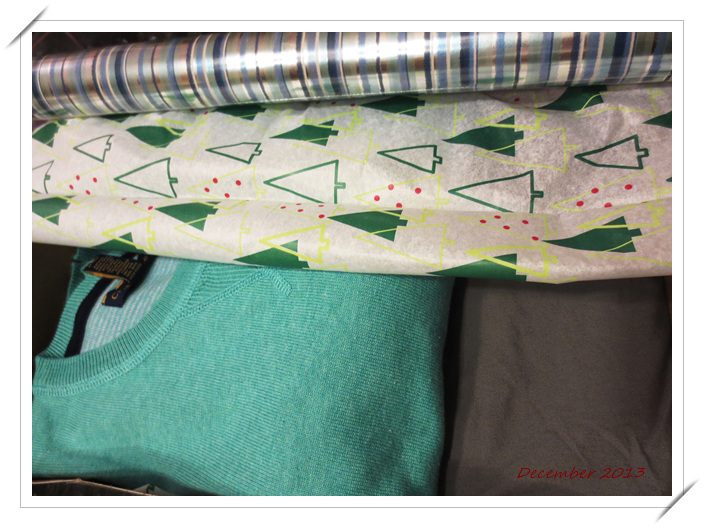
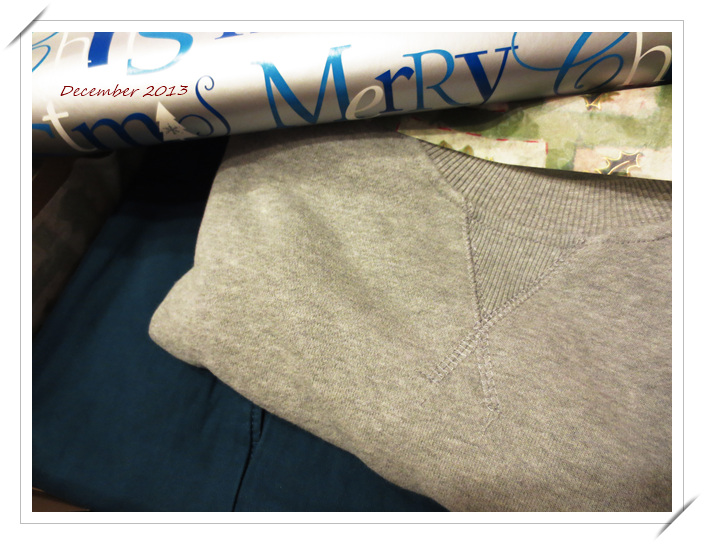
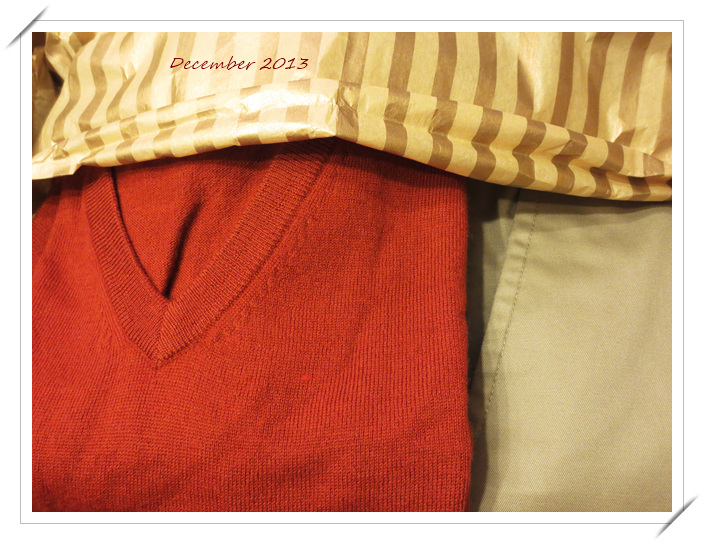
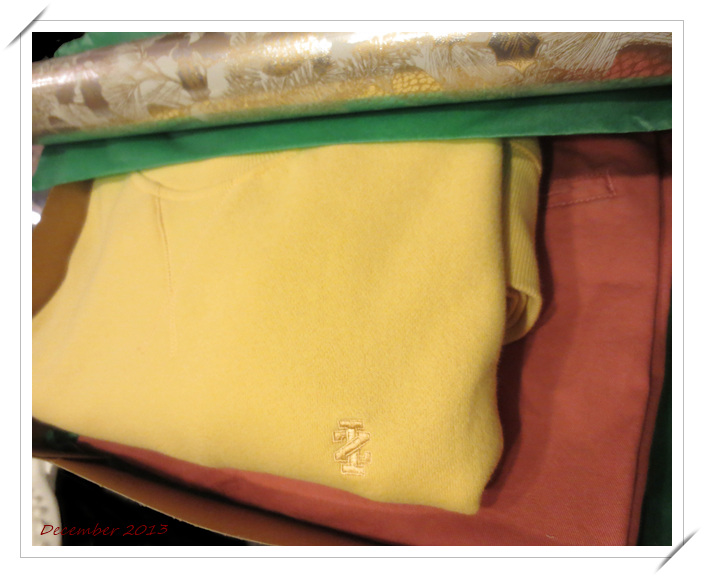
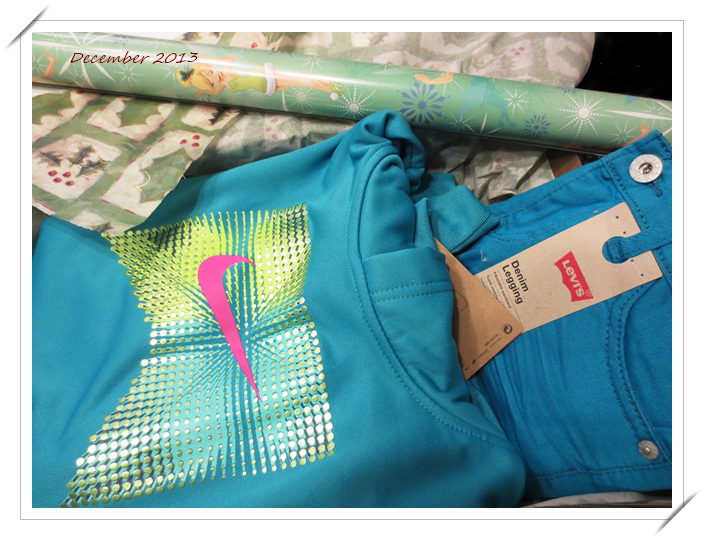
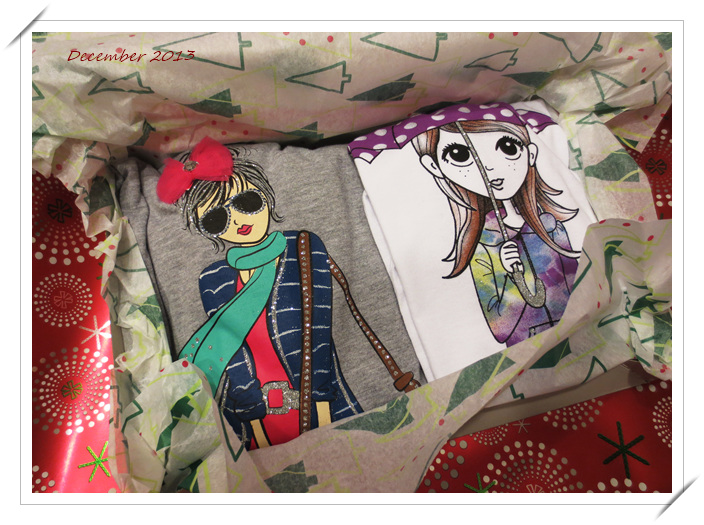
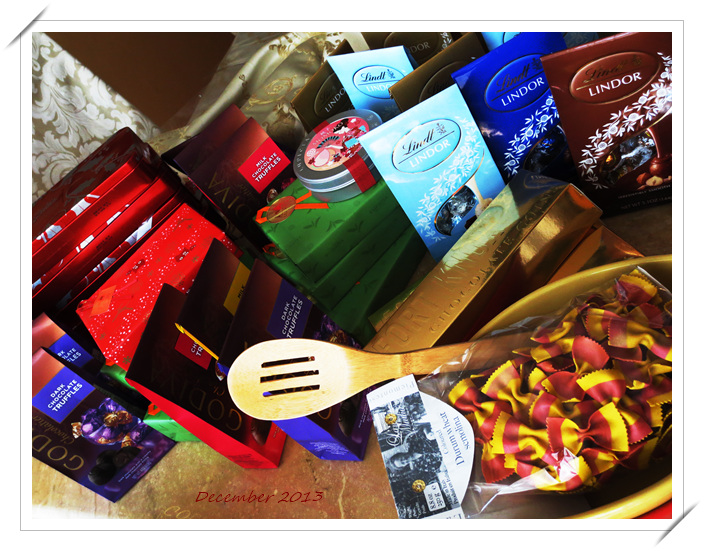
《节日采购单----陆上部分----彩色单(图片版》


给大跟班的:(酒红Burgandy颜色的裤子)


给H的,和准备让H穿的


(裤子是salmon 三文鱼颜色的)


给小跟班的:(两件长袖衬衫上的时装娃娃都穿戴着三维立体的纱网头饰或和裙子,很可爱。。)


给我的。。。一部分:

回复 支持 反对

使用道具 举报

发表于 2013-12-8 08:46:29 | 显示全部楼层
语婷 发表于 2013-12-8 04:01 AM
《节日采购单----陆上部分----彩色单(图片版》


语婷,你太可爱了。 你家圣诞树下摞满了礼物,孩子们一定很开心。这都是家的美好记忆的一部分。
不过看了你的清单,我马上向LD说了,养我很便宜啊。
回复 支持 反对

使用道具 举报

 楼主| 发表于 2013-12-8 22:05:05 | 显示全部楼层
yi_ran 发表于 2013-12-8 05:46 AM
语婷,你太可爱了。 你家圣诞树下摞满了礼物,孩子们一定很开心。这都是家的美好记忆的一部分。 ...

先回依然的点评:你有Marx, 怎样都比我贵多了?。。。。还有,我等着看哈,等你25年银婚时,看你贵还是我这点算贵~~

再回山人兄的点评: 莫4儿啦~。。。俺这不是为了给“25年”撑门面,给大家买些花花绿绿的盒子,营造气氛嘛。。。
回复 支持 反对

使用道具 举报

 楼主| 发表于 2013-12-8 22:15:25 | 显示全部楼层
yi_ran 发表于 2013-12-8 05:46 AM
语婷,你太可爱了。 你家圣诞树下摞满了礼物,孩子们一定很开心。这都是家的美好记忆的一部分。 ...

在下面的一年里,我一定不再给自己买衣服鞋子和除了内衣外的任何私人衣物了。。。

每次买之前,先上小站报大家审批,10以上通过3人以下反对,两项同时满足才能买。

平时没事时还是要多玩Mix and Match 玩搭配衣服,好处至少有两点:占用了闲暇时间,也就不用去店里乱逛了;熟悉了自己的衣服们,平时就多穿不同的搭配,旧物利用率提高,也就不想再有新的了?

不行,我觉得还得继续拓展空间,拓展女主人的壁橱占用面积才可以----还有很多很好看的搭配和衣服,不能容易地看到,就不会常穿啊~

挂起来的衣服们,并不一定是常穿的,而是需要挂着才好保持和保存。。。嗯~~小地主(婆)俺又该动脑筋了。

《还是壁橱太小惹的祸》
回复 支持 反对

使用道具 举报

 楼主| 发表于 2013-12-8 22:21:09 | 显示全部楼层
等我把家里精兵简政好,院子打点好,闲得实在没事可做了。。。也要养只狗。


从两个孩儿的妈,一下落魄成一个孩儿的妈。。。还真需要有些地方吸收多余的时间和能量。


《先做做梦,做做狗梦吧~~》

我要养个,不大不小的狗,要聪明的,强悍的,不掉毛的。。不咬家具的。。。
可我们白天没人在家里,他该多闷啊?
会得抑郁症?
养俩?

走进死胡同了:
结论又回来了:
一个都不养。

《俩孩儿他妈》
回复 支持 反对

使用道具 举报

发表于 2013-12-9 10:26:08 | 显示全部楼层
本帖最后由 yi_ran 于 2013-12-9 12:45 PM 编辑
语婷 发表于 2013-12-8 10:05 PM
先回依然的点评:你有Marx, 怎样都比我贵多了?。。。。还有,我等着看哈,等你25年银婚时,看你贵还 ...


好吧。等我告诉LD,我校友给我下战书了。你支持不支持我。

说到狗的大小,我在后院说了,那天看到一个九个月的Saint Bernard Puppy。还记得电影Beethoven吗,就是那种狗。我看到的是一个140磅的Puppy。 这是网络上来的Saint Bernard照片, 将来若是养一个可以给孙子当作骑:


我对Marx的大小还是很满意的。因为正好可以抱。 不过他的缺点是太粘人。随时看着家里人。要是一个人没看到,就要到处找。直到知道每个人在哪里才安心。
回复 支持 反对

使用道具 举报

发表于 2013-12-10 01:53:19 | 显示全部楼层
语婷 发表于 2013-12-8 01:01 AM
《节日采购单----陆上部分----彩色单(图片版》

好看。你还真用心打扮领导和儿子。俺家男生不喜欢衣服,俺就不操心了。你给儿子买什么牌子衣服?看着质量不错,等俺儿子身材定了,咱也买点好衣服打扮他,小伙子现在一米七八。他的好朋友打篮球,十四岁就一米八六,老中娃。身材不定,不敢买贵衣服,穿不了两次就得送人。

回复 支持 反对

使用道具 举报

发表于 2013-12-10 02:05:47 | 显示全部楼层
语婷 发表于 2013-12-7 11:34 PM
《节日采购单》

(1)给30来个同事和头头的礼物,截至到周五傍晚,已经买好了。给家人和自己的礼物还没开 ...

我最近也花了几百块买衣服,几百块买鞋和靴子,正肉紧,觉得不懂得攒钱,不过看你这么敢花,觉得心理舒服多了,生活嘛,你这过得多有滋味!最近过节爬梯较多,肥吃海塞,把减的磅又增回来了。气,还得再减。
回复 支持 反对

使用道具 举报

 楼主| 发表于 2013-12-10 17:04:24 | 显示全部楼层
yi_ran 发表于 2013-12-9 07:26 AM
好吧。等我告诉LD,我校友给我下战书了。你支持不支持我。

说到狗的大小,我在后院说了,那天看到一 ...


还下战书呢。。。我战谁啊?
我简直就是你的后台。。。和挡箭牌
你要好好利用我这块“挡箭牌”,25周年时好好敲敲你家领导的竹杠,
别象我这么小打小闹地敲不出个声响来!

--------
你家小马哥的品种挺好的,又可爱,又不掉毛,又聪明好训练,还和人很亲。。。
这些对我都重要。
但我好像比较想要一个不用抱的,“非玩具狗”。我抱不了任何的小动物。
大狗呢,又觉得他们吃得太多,难伺候;又觉得他们需要人陪伴,不然得抑郁症;又觉得他们在家里家外跑来跑去太脏乱。。。---我要是全天在家就好办多了,起码有时间陪他们和清理。

所以,想来想去,都养不了狗啊~~
每次梦想,都碰壁。
回复 支持 反对

使用道具 举报

 楼主| 发表于 2013-12-10 17:20:05 | 显示全部楼层
海鸥 发表于 2013-12-9 10:53 PM
好看。你还真用心打扮领导和儿子。俺家男生不喜欢衣服,俺就不操心了。你给儿子买什么牌子衣服?看着质量 ...

海鸥,节日快乐啊~
你家儿子那么小就那么高的个子了,让人高兴和羡慕。我希望我家儿子一米八,但看起来比较困难了~
男孩子高些更帅啊,找女孩子的范围也更大。

---
我不给孩子们买什么“名贵好衣服”。我也不给自己和H买“名贵好衣服”。就是看着好看,自己喜欢,质量也合适,就好了。当然,大人和大孩子,买点质量高的经典衣服也重要,有些衣服一年穿不了几次,但可以穿一辈子。


不一定啊,我不太追求名牌的,任何好看的款式,任何好的质料,感觉值得的,我就会买了。
这次是在Macy‘s买的衣服们。
我其实很少逛衣店。Macy’s 离我家不到3迈,我也是一年去开张2-4次。
其它时候就是去Target买日用品时,顺便看看大小跟班的衣服,在那里我倒是每次500-600元地花。因为小孩子的衣服便宜啊,又可爱,混搭样子和颜色,一买就一堆,单件衣服便宜,一堆也就挺贵的~


你估计学不了我。我家大跟班穿衣尚且不挑剔。以前是Child Place和Target就把他搞定了。偶尔在GAP开张。
以后大概也要注意一下培养和发展他自己的风格了。

大跟班是个特别可爱的聪明孩子,他总是觉得自己在同龄的孩子里话很少,但他和大人交谈,和有些小小孩和同龄人交谈,都特别善谈。。。很多科学的,文学的,哲学的。。乱七八糟知识他都有,大人们总觉得他想得蛮深很成熟。但运动方面是他的死角,他似乎也没什么可聊的。。。而运动又是美国人从小孩到大人的主要话题。你看,这就是问题所在了~~

《又聊到大跟班身上了》
回复 支持 反对

使用道具 举报

 楼主| 发表于 2013-12-10 17:30:41 | 显示全部楼层
海鸥 发表于 2013-12-9 11:05 PM
我最近也花了几百块买衣服,几百块买鞋和靴子,正肉紧,觉得不懂得攒钱,不过看你这么敢花,觉得心理舒服 ...


我大概。。。真的。。。太不象话了?
我的确挺会花钱的。
但都不是故意的~

俺是没小心就花了这么多。
而且还觉得自己挺节省的

我的口号是:
俺不买房子,不买车,不买船,不买飞机票,不买珠宝首饰,不追求名牌,甚至不随便“下馆子”
俺。。
俺真的觉得自己还挺乖的。

难道不是吗?啊?

《别的人真的都那么会攒钱吗?》

但我觉得不论怎样也不能活得对不起自己啊~~~
不然也对不起俺爹俺娘
对不起俺俩孩子
对不起俺俩孩子他爹

甚至都对不起看我一眼的人们。。。昨天晚上下班,我带着新买的近视眼镜,洞察一切地开到中文学校去接妹妹。从走进学校开始,每个人都看我。从走进教室开始,老师看了我4-6眼;其他同学看了我3-4眼;就连我女儿,妹妹。。。也抬眼看了我3-4眼。

我。。。我有那么奇怪吗?!!
决心以后再不戴眼镜在熟人面前乱晃了~~
回复 支持 反对

使用道具 举报

发表于 2013-12-10 17:53:47 | 显示全部楼层
语婷 发表于 2013-12-10 02:30 PM
我大概。。。真的。。。太不象话了?
我的确挺会花钱的。
但都不是故意的~

我也常戴眼镜,不过是花镜,我从不近视,这不早早就花了。特别拜IPAD的所赐,花得更厉害。
对了,问问你的自拍相机是不是Casio那个TR10 什么的,在亚洲特流行的?那相机专门自拍。
回复 支持 反对

使用道具 举报

 楼主| 发表于 2013-12-10 18:16:27 | 显示全部楼层
《我和H》
我俩有同样色彩的衣服,不同的款式,手拉手出去,是谓玩couple “夫妻装”
有一天在附近“便民店”里看到一个60岁男人穿的T恤衫,身后写:If Lost,Please Return to Rena,看后不知所云;妹妹一指不远处一个60岁的胖太太。我一看她的T恤衫身后写:I am Rena。 哈哈,有趣~


《我和小跟班》
我和小跟班有个MAD Club,妈妈和女儿俱乐部。我俩有很多一样款式一样颜色的衣服;也时而搭配穿同一色调或风格的衣服,一同出门。有时候我俩穿同一款式不同颜色,摆出酷毙的样子让家里两个男生看。他俩异口同声:“服了。”我和妹妹是H嘴里的“二美”,也是“二妹”的谐音。H时不常会在餐桌上偏着头观察和欣赏我们两女人,微笑,时而摇头,时而赞叹:唉~~女人真是一种不同的生灵。怎就这么不同呢?。。。常常搞不懂你们的小脑瓜里都在想什么。。。都神奇令人感觉奇妙啊~

每到这时,我一定会回敬H一个配得上的感叹的眼神,那种故意做出来的,高傲的风情的戏剧性的眼神。H必哧哧笑。妹妹,别看她眼睛细,在这眼神方面比我厉害不止一两个量级。我俩要是同时“放电”,H就会放声大笑了~


《我和大跟班》
儿子小时候,漂亮多于英俊。漂亮,就是齿白唇红眉清目秀地漂亮,句号。我喜欢打扮他,就象我喜欢设计任何作品一样的。。他长大后就不容易了,我对他放任+放羊。我和他玩不了姐妹装,连姐弟装也玩不了。但朋友和学校老师都说我象他大姐,所以有时候我穿装嫩的衣服时,就会故意和他站一起。

小跟班有时会对我们说:知道吗? 我和妈妈哥哥一起出去时,有一种奇怪的感觉,我觉得别人以为哥哥和妈妈是我爸妈呢。。。但是小跟班很礼貌,她不曾把这句话一次完整地说出来。

嗯。。。这是不是在间接地批评我啊?
我把大跟班打扮得太老气横秋了
把自己打扮得太中年危机揪青春尾巴装嫩了。。(其实俺哪还有青春尾巴啊?就是搞不清楚自己这年龄,在这种时代里,哪些是“该”穿或不该穿。---每一代人都是自己的时装先锋啊!谁会在40岁时穿父母40岁时穿的衣服呢?。。)

《我和两跟班,还有H》
我们有自己的队服,比如每个人都有迷彩裤,不同风格的,除H外。
每个人都有动物型线帽,帽子式或帽圈式,包括H
每个人都有登山遮阳帽,那种防紫外线的活动挡板遮阳帽圈。
不能尽数。
回复 支持 反对

使用道具 举报

 楼主| 发表于 2013-12-10 18:29:52 | 显示全部楼层
海鸥 发表于 2013-12-10 02:53 PM
我也常戴眼镜,不过是花镜,我从不近视,这不早早就花了。特别拜IPAD的所赐,花得更厉害。
对了 ...

天那,俺是最out的一个人。。。
任何流行的东西,你尽管大步流星走,放眼向前看。。
俺绝对在你身后,某个地方呢~


我的就是一个傻瓜相机,家里有什么就用什么,这个蓝色的本来是买给妹妹玩的,因为它最小也轻,我常用。功能和清晰度什么的就不能讲究了。好在我也不讲究,这里看的朋友也懒得再追究。。。就这样了。

-----
我现在也有一点点老花的度数了,之所以平时没察觉,是因为这个近视的度数帮助我“抵消了”老花的度数,所以现在读书缝纫还不察觉。我父母是医生,用眼睛也挺多的,他们也是好视力,所以40出头就开始老花了。。。我只记得他们常常更新老花镜,买各种漂亮的时新的小眼镜,放得到处都是:有的在厨房用,有的读书用。。。那时候我们都年轻啊,哪里知道老花的辛苦。


回复 支持 反对

使用道具 举报

 楼主| 发表于 2013-12-11 17:47:02 | 显示全部楼层
本帖最后由 语婷 于 2013-12-11 02:51 PM 编辑


《需要与时俱进的咖啡》


周末在Fry's电器店里面,碰上Nespresso牌子的coffee maker促销。妹妹和我分享了一杯Cappuccino,味道和口感都不错,连妹妹都喜欢,问我要不要买一个。但那个coffee maker是single serve,用capsulers的。我不喜欢single serve的coffee maker,觉得它太局限我对咖啡品种的选择了。

但是,的确。。。家里的coffee maker是传统式样的,陶瓷一体,很漂亮。
味道就不能讲究了,尤其没有做espresso和latte或是capuccino的功能。
换新吗?

我家里,我是coffee lover,几乎每天喝,一杯到三杯。H也偶尔喝,孩子们也喝,但只在周末,偶尔喝。
我们一家都喜爱咖啡啊~
也许值得投资买一个,好些的。


弟弟是新新人类,爱享受。除了旅游,摄影,品酒,咖啡也是他独自或聚众时的好噱头。
四年前他来美国时买了一个降价后900多美金的专业家用espresso maker,还是我过后替他背回中国的。

我可没钱买那么贵的espresso maker。
没地方摆
而且也担心把自己和家人都变成“咖啡成瘾”的coffee snob。

但是,仍然想满足一家人对咖啡口感的要求。
就从pump espresso maker 开始吧。

-------------
《The Home Barista's Guide to Espresso》By Jim Schulman  

Content:
Introduction
Short history of espresso
Today's espresso scene
Espresso blends
Espresso grinders
Espresso machines
Barista techniques
Dose, distribute, tamp. Repeat.
Good extraction, good espresso
Better extraction, better espresso
Diagnosis of extraction problems
Frothing milk
Pouring latte art
Cleaning and Maintenance
Resources
============
Who is this guide for?

It isn't for someone sitting amidst the packing crates of their first espresso machine looking for quick tips (the Espresso Mini-FAQ may serve that purpose). However, if you've discovered your love for espresso and realize no quick guide will get you to the perfect shot, you've found the right place. This is an introduction to espresso by an enthusiast for the budding enthusiast. It is not just about techniques and equipment, but also the reasons behind them.

The knowledge and skills for great espresso are out there waiting for you, and thanks to the Internet they've gotten easier to find. But to an outsider, the discussion on web sites can seem like babble. Espresso equipment and preparation are argued over in minute detail, often with no indication of the topic's importance. And the taste of espresso is lauded or condemned with hyperbole worthy of a poet or wine critic. But the seeming loons posting this stuff are making some of the best espresso on the planet. Understanding what they're talking about and being able to use their ideas in your own espresso making is the best way to improve.


This guide is long and sometimes opinionated. I don't apologize for either. It conveys the basic knowledge of the espresso community, as well as some of its arguments and hot button topics. More importantly, it teaches you the language we're speaking and lets you join in.

The guide's main topic is making real espresso and espresso drinks at home. The sad fact is, outside of Italy and the other Latin espresso-making countries, few people have had real espresso. Most cafés sell overpriced hot milk with coffee flavoring, and the majority of the mass market home espresso machines are designed to produce the same. For such drinks, espresso quality is irrelevant. There have always been a few great cafés outside the espresso countries, and thanks to the growing number of enthusiasts, their number is growing too. But even large cities are lucky if they have more than one or two. So for most of us who insist on good espresso, the only option is to make it ourselves.

Unfortunately, good espresso is not easy to make—it takes practice. Mass produced home espresso machines are unequal to the task. A minimal set-up capable of excellent shots will cost around US$500, and those capable of delivering consistency and a degree of ease cost $1000 and up. All I can say is that the taste is worth it.

There is an added bonus. The world of coffee is fascinating and the people in it are wonderful. Becoming good at making espresso means getting to know and appreciate that world and its people. And that is just as rewarding as the taste of great coffee.

The guide is divided into this introduction and four content pages. It begins with a short history of espresso and an overview of the contemporary scene. Next the guide turns to the first three of the "four Ms" of espresso: Miscela (coffee blend), Macinacaffe (grinder) and Macchina (espresso machine). Skills of the barista, Mano, are then covered in considerable detail, including instructions for making cappuccinos and lattes. Lastly, the guide offers a selected set of links that will get you started on the coffee Internet.

If you're an old hand on the coffee Internet, much in this guide will be familiar. But the list of tips in the shot diagnostic section is more comprehensive than any I've run across, and may contain some that are new to you. The history section has my take on where espresso is heading and may be good for some laughs, especially in about five year's time.

Finally, a word on the reliability of the information in this guide. The basic facts are accurate to the best of my knowledge. The information on how machine settings and options or shot making variations affect taste is based on the consensus of the espresso community, and has worked in my own practice. However, there are always disagreements, and in some cases, the evidence is meager. In other words, this guide will get you started making excellent espresso, but is far from the final word. Once you have become confident in your technique and taste, I urge you to try out alternatives and judge for yourself.


回复 支持 反对

使用道具 举报

发表于 2013-12-11 17:53:53 | 显示全部楼层
我都是自己买咖啡豆,磨了后放在replacement capsule 做。这样每次买不多,也新鲜。
回复 支持 反对

使用道具 举报

 楼主| 发表于 2013-12-11 17:55:57 | 显示全部楼层


Contents

Introduction
Short history of espresso
Today's espresso scene
Espresso blends
Espresso grinders
Espresso machines
Barista techniques
Dose, distribute, tamp. Repeat.
Good extraction, good espresso
Better extraction, better espresso
Diagnosis of extraction problems
Frothing milk
Pouring latte art
Cleaning and Maintenance
Resources

Short History of Espresso   

The term café-espress has been used since the 1880s, well before espresso machines existed. It means coffee made to order, expressly for the person ordering it. It also means coffee fresh in every sense of the word:

Made from fresh beans roasted at most two weeks prior to use,
Ground just before brewing,
Brewed just before drinking.
Ideally, all cafés and restaurants would serve even their regularly brewed coffee as espresso in this larger sense—freshly ground in press pots, neopolitans, vacuum brewers or table top pourovers. The aroma of good coffee is delicate and dissipates in a matter of minutes after grinding, whether it is brewed or not.


Early steam-powered Bezzera

People are in a hurry. For many workers, waiting five minutes for coffee to brew is too long. They were also in a hurry 100 years ago when inventors started looking for faster ways to brew coffee to order. It being the age of steam, the first attempts used steam rather than water. A steam brewing contraption at the 1896 World's Fair is said to have made 3000 cups per hour. Unfortunately, steam-brewed coffee tastes awful since coffee generally needs to brew at just below boiling (195-205°F or 90-96°C) to taste its best. In 1901, the Italian inventor Luigi Bezzera came up with a workable solution. Pavoni manufactured these first espresso machines in 1905.

This machine was also steam powered. However, the steam does not come into contact with the coffee. Instead, steam pressure at the top of the boiler forces water at the bottom of the boiler through ground coffee. The coffee is held in a group consisting of a portafilter, a metal filter basket and removable brass mount, and a brew head into which the portafilter attaches. The piping and group were designed to act as heat radiators, so the temperature of the pressurized water dropped from 250°F (120°C) in the boiler to the correct brewing temperature at the grouphead. This brewing principle is still used in stovetop mochapots. Since the water was pressurized, the coffee could be ground finer than in a regular pourover brewer, reducing the minimum brewing cycle from about 4 minutes to 30 seconds. Espresso machines and their accompanying coffee grinders became the standard equipment for making coffee in Italy, Southern France, Spain and Latin America. In other parts of the world, it followed Italian immigrants who popularized it in each country they settled.

But technology moves on, and this method is no longer regarded as specifically espresso, although mochapots and other steam pressured brewers continue to be marketed under the name. In the 1920s through the 1940s, Italian engineers experimented with pumping devices to increase the brewing pressure. The first practical one was developed by Cremonesi in 1938 and manufactured by Achille Gaggia in 1946. It used a hand powered piston. On machines of this type, steam pressure in the boiler forces the water into a cylinder, but then it is pressurized further by a spring-powered piston to about 8 to 9 bar (120 to 135 PSI), or 8 to 9 times the pressure that had been developed by the steam machines. The spring that powers the piston is compressed by a lever forced down by the barista (Italian for barkeep)—the person making the coffee. As with the older generation machines, these lever groups are designed to cool the water from boiler to brewing temperature.


Early Gaggia lever machine

Now we have modern espresso in the restricted sense of the term—coffee brewed with water at 8 to 9 bar pressure between 90°C to 96°C. This technology also explains why modern espresso uses the same amount in a small one ounce drink as was previously used in 2½ ounce demitasse espressos or five ounce regular cups of coffee. The pressurization cylinder could only hold that much water, otherwise the arm strength required to compress the spring would have been prohibitive. Finally, if it's done just right, the added brewing pressure creates a nice layer of foam over the coffee called crema.

What's this scum on my coffee?!?
Legend has it that the first patrons to drink the new potion at Gaggia's coffee bar didn't think it was so nice. They asked, "What's this scum (sciuma - foam) on my coffee?" So in a marketing ploy, Gaggia called the new drink "caffè crema" instead of espresso. For about a decade, espresso machines were made with some groups using the old style one bar steam pressure and others using the new-fangled nine bar spring-lever pressure. But in time, the new style won out and became the true espresso. The term "caffè crema" died out, only to be revived for another style of coffee drink by the Swiss in the 80s.


Faema E61

The next innovations were commercialized in 1961 by Faema. Instead of a piston situated between the boiler and ground coffee, they used an electric pump to move cold water through a heat exchanger that traversed the boiler to the grouphead. The heat exchanger was designed to heat the water to the correct brewing temperature. Since the group was no longer used to cool the water, it too had to be held at the correct brewing temperature. Faema used a hot water circulation system to keep the group hot; other manufacturers used a hot water jacket or kept the group in close thermal contact with the boiler for the same purpose.

The cylinder on lever groups only held an ounce of water, limiting the volume that could be used to prepare an espresso. There are no such limits for an electric pump. So why hasn't espresso gone back to being a regular or demitasse cup of coffee, only brewed more quickly using pressure? This is precisely what the Swiss do for the drink now called a café crema. However, by the time the newer electric pump models came out, espresso had become its own drink category, and people had developed a taste for the "little cup." The only change to espresso created by electric pump machines is the introduction of the double espresso—double the water and double the coffee for a drink with the identical concentration and taste.

Home lever machines had been designed since the 1960s, but they didn't achieve a mass market because of two severe shortcomings: the groups were too small, so the coffee would overheat after a few shots, and the shortened levers required considerable arm strength. The next big breakthrough came in the late 1970s. A company called Ulka introduced a small, inexpensive pump that could still produce the pressure required by modern espresso. This made affordable and small home pump espresso machines a practical possibility. Gaggia and Quick Mill brought out the first models and many other manufacturers soon followed.
回复 支持 反对

使用道具 举报

发表于 2013-12-11 17:56:50 | 显示全部楼层
我给先生买了manual espresso maker. 结果他嫌苦,espresso就是苦呀。
回复 支持 反对

使用道具 举报

 楼主| 发表于 2013-12-11 17:58:13 | 显示全部楼层


Contents

Introduction
Short history of espresso
Today's espresso scene
Espresso blends
Espresso grinders
Espresso machines
Barista techniques
Dose, distribute, tamp. Repeat.
Good extraction, good espresso
Better extraction, better espresso
Diagnosis of extraction problems
Frothing milk
Pouring latte art
Cleaning and Maintenance
Resources

Today's Espresso Scene

Kees van der Westen's
La Marzocco based Speedster

We are currently experiencing a new wave of innovation as the electronics revolution is catching up with coffee machines. There are fully automated, push button espresso machines which grind and make a fresh shot or cup in one touch. They do a better job than poorly trained people, but not as good as the best trained baristas. Electronics are also prompting a wave of new manual machine designs that allow more precision and adjustment of both brewing temperature and pressure.

Will this new wave again redefine what we call an espresso? Perhaps it will, and probably it should.

First, a development on the technical side: A good contemporary espresso has a layer of crema, but much of the coffee is still liquid. However, every espresso hound has experienced shots that are almost all foam and stable for long enough to drink as such. Increasing precision in the brewing technology is allowing such all-foam shots to become the standard.

There is also a more radical change on the horizon. Espresso brewing has a weakness. While it does wonders for rather ordinary, low grown, low acid coffees from Brazil and Indonesia, it produces too sour and acrid a taste when used with most of the finest high grown, high acid coffees from Central America or Africa. These "grand cru" coffees still have to be brewed in the old-fashioned way, or used in only small amounts for espresso blends. I hope that changes in technique, grinder and machine design will soon bring the very best coffees to the little cup.

Why do I think this will happen?

The current espresso-making technique was developed in Italy, where espresso is cheap and regarded as the equivalent of take-out coffee. They have refined it to the point where there is no better way to prepare everyday coffees. But in the rest of the world, the situation is very different. Espresso is sold as a premium drink because it is so much better than the local everyday coffees. This has created a large number of espresso enthusiasts whose attitude often bewilders Italians. With the advent of the Internet, these enthusiasts, comprised of both professionals and their amateur customers, have come together and are improving on the state of the art. Manufacturers serving this market make more precise machines; roasters use higher quality coffees in their espresso blends; and baristas push the envelope of skill, especially since the advent of the Barista World Championships. In this friendly competition to be the best, people will want to use the most premium coffees they can and demand equipment able to unlock their wonders. Most of the new innovators will probably not be Italian, although it will probably be Italian manufacturers that make use of the discoveries.

But there is also a looming shadow—the number of coffee drinkers is declining. Mass coffee marketeers have misread the coffee market for the last fifty years, and their products have become ever cheaper and more vile. Few people new to coffee would knowlingly choose to drink Folgers or Maxwell House as they are now. The specialty coffee roasters of the 80s did create a new, younger coffee public, but they now have been sidetracked into pandering with ever more massive and sweet milk concoctions mislabeled as espresso. These drinks are gradually moving into Coke and Pepsi's turf, and when these giants finally notice and bring the stuff out in cans at fifty cents a pop, even Starbucks is going to get squashed. Espresso is in danger of becoming just another soft drink flavor.

The widening range of equipment and beverages labeled as 'espresso' has prompted specialty coffee associations to issue standards for genuine espresso. Here is a link to the Italian and the best American standard. These standards are excellent, but nevertheless, I have some problems with them:

Being voluntary, they do nothing to curtail the misuse of the term 'espresso' by the worst elements of the industry,
Having been adopted by the best baristas for competition, the best cafés for their practice, and the best manufacturers for equipment design, they may inhibit the cream of the industry from innovating,
Having been negotiated by large industry players, these standards do not specify freshly roasted, freshly ground coffee, and thereby get the details right while missing the main point: fresh coffee. Coffee freshly roasted, ground, and prepared is the one thing that cannot be canned and mass marketed. It should be the first line in every espresso specification.
If you are reading this, it's likely you are an actual or budding espresso enthusiast. The latest innovations have been driven and even developed by amateur and professional enthusiasts. It is also enthusiasts who can put a brake to the bastardization of coffee and espresso into ever more inane soft drinks. My fervent hope is that this introduction to the art of home espresso will help.
回复 支持 反对

使用道具 举报

 楼主| 发表于 2013-12-11 18:04:30 | 显示全部楼层
红娘子 发表于 2013-12-11 02:56 PM
我给先生买了manual espresso maker. 结果他嫌苦,espresso就是苦呀。

就是放在炉子上直接加热的那个小家伙吗?
espresso shot 是挺苦的,对热爱某种咖啡味道的人来说是“挺浓烈”的。但有人就是热爱这种浓烈的味道,我前公司的CEO喜欢喝double espresso。

喝espresso,是象和中国的白酒那样喝。准确地说应该叫作“品”,是那种一小口一小口地在舌尖上品味地“喝”,大口喝就浪费了。就象现在国内人豪饮白酒一样,那样的喝法,越是好酒,越是浪费啊~
回复 支持 反对

使用道具 举报

 楼主| 发表于 2013-12-11 18:07:16 | 显示全部楼层
  

Contents

Introduction
Short history of espresso
Today's espresso scene
Espresso blends
Espresso grinders
Espresso machines
Barista techniques
Dose, distribute, tamp. Repeat.
Good extraction, good espresso
Better extraction, better espresso
Diagnosis of extraction problems
Frothing milk
Pouring latte art
Cleaning and Maintenance
Resources

《 Introduction to Espresso Blends》

First, if you can't tell the difference between a Panamanian and Papua New Guinean coffee, put off the espresso and get to know good coffee first. Buy a freshly roasted half pound each from Central America, Africa, South America, and Indonesia, and learn to appreciate their differences. Those who buy the green coffees for espresso, those who roast and blend them, and those who pull the best shots have one thing in common: they know their coffee well. In any case, espresso is coffee intensified; if there are coffees you dislike brewed, you really want to avoid them in espresso.

Second, go into a coffee store and look for "espresso roast." What you'll almost always find is dark brown to black beans shining in oil. Starbucks' success has reinforced the impression that espresso is any coffee roasted very dark. This is wrong on almost all counts. Coffee blends destined for espresso come in a variety of roasts, ranging from a milk chocolate colored dry bean, to a dark chocolate colored slightly oil-sheened bean, to a black and very oily bean. The very lightest roasts for regular brewing (cinnamon or tan colored) cannot be used for espresso, but otherwise any roast level will work.

Instead, espresso is almost always a blend of beans; the Italian word for blend is miscela. There is fairly wide latitude in blending, but there are also some general rules. The most basic rule of espresso blending is that espresso must have subdued acidity, be heavy bodied, and be sweet enough to balance the bitter and acidic flavors in the blend.

At the Coffee Plantation
A large proportion of the blend will consist of "natural" or "pulped-natural" processed beans from Brasil, Indonesia, Ethiopia, or Yemen. Natural or "dry processed" means the coffee cherry is air dried on the tree or on terraces prior to removing the skin and fruit from the pit (the actual coffee bean). Pulped-natural or "semi-wet processed" means the skin is removed, but the fruit remains on the bean while it is drying. These techniques create the more heavy bodied, sweet, and subdued acidity coffees required by espresso brewing. Such coffees also develop more crema. Single origin, unblended espresso is almost always derived from a bean of this type. The drawback of these techniques, even when carefully done, is they create a few fermented beans with off-flavors that slightly muddy the aroma and taste.

The alternative, known as wet processing, washes the skin and fruit off the bean prior to drying. This process produces less sweet, more acidic coffees, which generally would be unsuitable for espresso if used pure. However, since these beans often have beautifully clean and powerful floral and fruity aromas and tastes, they are used in smaller proportions in more expensive blends to enhance the more subdued taste of dry processed beans. When these beans are used, the coffee is usually roasted at the lighter end of the espresso spectrum, since dark roasting destroys their aromatics.

Finally, some espresso blends use Robusta coffees, which derive from a different species of coffee tree found at lower altitudes and having higher yields. These coffees are generally less expensive than the Arabicas discussed above. Low grade Robustas can add body, sweetness, and above all, very strong crema to an espresso. But they do so at the expense of having an unpleasant, burnt rubber smell. High grade Robustas do not have this offensive odor, but will usually muffle the other aromatics. Their use is controversial. Many very gifted espresso professionals use Robustas, while many others would never touch them.

At the Roaster
Different roasters have different blending strategies. Some use only two to four different coffees; these blends can have very distinct tastes and will vary a lot year to year. Other roasters will try to keep the blend's taste the same year in, year out. They will do this by using seven to twelve different coffees, many from different plantations in the same country and region, so as to average out the annual variations of coffees from any one plantation.

As with all coffee, espresso blends are always best when used within two weeks of roasting. Unlike regular brewing, the carbon dioxide in the beans in the first day or two after roasting can sometimes interfere with the espresso extraction, so many cafés allow the coffee to rest 48 hours prior to use.

My main advice is to first find several good local roasters. Try many different espresso blends, varying in roast levels, use of Robusta (or not), level of acidity, or use of wet processed coffees, and then decide for yourself which styles you like most. Ask the roasters about what's in the blend; the exact recipes are usually proprietary, but they will be happy to give you general information so you can develop an informed preference. If you home roast, try various dry or semi-wet processed Brasils, Indonesians, Ethiopian and Yemen coffees, and create a blending base from your favorites among these. Then add small amounts of your favorite wet processed, high grown Arabica to give it some distinctiveness. If this later coffee is exceptionally sweet and low acid, more than the usual 10% to 20% can be used.

Single Origin Espresso
As mentioned earlier, most washed, high grown coffees are unsuitable for espresso either straight or in high proportions in a blend. In my opinion, this shows that espresso technology requires further development. It would be absurd if you tried to buy a coffee and were told it was too strong to be prepared in a presspot.

However, espresso technology has advanced far enough so that some high-grown, washed coffees can make interesting and sometimes spectacular shots. These usually don't have the balance of conventional blends, but can have far more interesting aromas and tastes. Low toned, sweet coffees, even those from regions usually not regarded as suitable for espresso, are always worth trying as single origin shots. The research that could adapt espresso equipment to the full range of coffees won't happen until more people try these, develop an appreciation for them, and form a market for roasters, cafés, and manufacturers pushing the envelope.

Water for Espresso
Finally, a note about water, the other constituent of good coffee and espresso. Water for coffee should be pure and odor free. Charcoal filtering to remove chlorine and sediments from municipal water is a good idea. Further filtering is required if the water is from a well having iron, sulfur, heavy metals, or organic contaminants. Alternatively, consider bottled water.

Note that "pure water" in this case does not mean distilled or free of all minerals. Natural water contains calcium carbonate and some magnesium carbonate; these constitute the water's hardness. Overly soft (low mineral) water will create a light bodied, metallic and excessively bright tasting shot. Overly hard (high mineral) water will scale the machine, while the chalkiness of the calcium carbonates precipitating as the water heats will interfere with proper extraction. The best coffee water has about 5 grains (90 mg/L) hardness and 150 mg/L total mineral content. For espresso machines, water at about 3 grains (50 mg/L) and 90 mg/L total mineral content is used to reduce descaling costs. This is a compromise on the ideal water for espresso, but the 90 mg/L shots are almost indistinguishable from shots with the higher 150 mg/L mineral content. If your tap water is excessively hard or soft, look into bottled water or water treatment options, many of which are not expensive.


回复 支持 反对

使用道具 举报

 楼主| 发表于 2013-12-11 18:11:12 | 显示全部楼层


Contents

Introduction
Short history of espresso
Today's espresso scene
Espresso blends
Espresso grinders
Espresso machines
Barista techniques
Dose, distribute, tamp. Repeat.
Good extraction, good espresso
Better extraction, better espresso
Diagnosis of extraction problems
Frothing milk
Pouring latte art
Cleaning and Maintenance
Resources


《Introduction to Espresso Grinders》

There is only one thing every espresso expert agrees on: The grinder is the single most important piece of coffee equipment you'll buy, and the last place you'd want to skimp. This has a simple reason—the coffee grind is both the most critical and the weakest link in espresso making. It is critical, since unlike regular brewing, the grinder adjustment determines both the espresso's extraction rate and it's brewing time. The grinder is the weakest link because ground coffee is anything but uniform.

Grinder Adjustability
When brewing, there's two time factors—the amount of time the coffee should brew, and the amount of time it does brew. The grind fineness determines how long it should brew—the finer the grind, the faster the proper brew time. Less brew time is better when the grind is finer because more surface area is in contact with the water and the coffee solubles dissolve more quickly. But for most brewing methods, the amount of time it does brew is determined by you since you can choose to pour through the filter faster or slower, let the French press brew longer or shorter, etc. This means for non-espresso preparation, you can stick to one grind and pick a brewing time to match.

In espresso, the grind fineness also determines the brewing time, but does so in the opposite direction from the time it should brew. The finer the grind, the more the coffee puck resists the flow, and the longer it takes to brew the same amount of espresso. But the finer the grind, the quicker the coffee solubles extract. In other words, there is only one correct grind setting that gets just the correct timing, and even small deviations screws it up, giving you either an over or underextracted espresso. In practice, good baristas will frequently make minute adjustments to the grind to keep it at the sweet spot as beans age, and ambient conditions change.

Experience shows that the correct timing for espresso is brewing one ounce singles or two ounce doubles in about 25 to 30 seconds; grind fineness should be selected to produce this volume in this time. There are a few things the barista can do to compensate for a slightly off grind, which I'll discuss later in the Mano section. But these tricks are limited; in practice one needs a grinder with lots of available settings.

Many home grinders only have 10 to 20 settings over the entire range from fine to coarse. This translates to about 2 to 4 settings in the espresso range, which is not enough to get the grind right. An espresso grinder either needs a stepless adjustment, or at least 40 settings over the entire range in order to work well.

Grind Quality

In theory, if all the ground coffee had the same particle size, it would all brew at the same rate and you could get a perfect extraction. If the grind size is not uniform, the smaller particles overextract, the larger ones underextract, and the result is less than perfect. Unfortunately, coffee is brittle and shatters as it is ground. So even the best contemporary grinders produce a wide distribution of particle sizes. Moreover, some size variation is required for the mechanics of the espresso puck. If all the particles had the same size, there would be large gaps in the coffee puck, and the pressurized water would gush through. A wide distribution of sizes creates a dense pack that resists the flow and allows proper extraction. This is probably the reason why high grown coffees don't do well as espresso since their fines (smallest, dust like grind particles) create a very acrid taste.

The very best grinders are commercial conical burr grinders. These produce elongated particles which pack well, and fewer fines. They are currently very expensive and beyond the reach of almost all home espresso enthusiasts.

Commercial flat burr grinders are nearly as good, although they produce slightly more fines and a more metallic taste with high grown coffees. However, smaller models are only one-third to one-quarter the price of commercial conical burr grinders, and they include some packaged specifically for home use. These run from about $250 to $500 and are recommended for anybody serious about espresso.


--------------------------------------------------------------------------------

   
Mazzer flat burrs - note sharp deep ridges
  Fake flat burrs - knobs crush beans


--------------------------------------------------------------------------------


There are several manufacturers of home conical grinders. These models work very well for brewed coffee, and some models have enough grind settings to work fairly well for espresso. However, the taste won't be as good as a commercial grinder's. They have lower power motors, plastic gears and lighter duty burr mounts; so the burrs wobble and vary in speed slightly during the grind. Espresso particle size is measured in the 1/1000ths of inches, so even a little wobble and speed change degrades grind quality. Nonetheless, such grinders are a decent economy choice and cost around $150.


--------------------------------------------------------------------------------

   
Solis conical burrs mounted on soft plastic
  Innova conical burrs mounted on hard resin


--------------------------------------------------------------------------------


Finally there are contraptions falsely called burr grinders that cost around $50. These are not actually burr grinders, but use knobs to crush the beans. Since this produces a large quantity of fines, they will produce an acrid shot with even the most mild mannered all-Brasil blends. They are to be strictly avoided for any coffee use. Whirling blade grinders (that look like tiny blenders or food processors) are also to be avoided, since they too produce excessive dust.

There are non-coffee factors to grinder design that affect their cost. In general, grinders which do a good job but are less expensive tend to be slower, noisier, and messier. It is up to each person to weigh their priorities in economy versus lack of annoyances.

It seems fairly clear to me that any fundamental innovation in espresso will require improvements in grinding coffee. However, the problems are great, so this is an area where technology moves slowly. In the mean time, the existing technological deficiencies in grinder design means that one has to buy the best grinder possible to get decent performance.
回复 支持 反对

使用道具 举报

发表于 2013-12-11 18:13:53 | 显示全部楼层
语婷 发表于 2013-12-11 05:04 PM
就是放在炉子上直接加热的那个小家伙吗?
espresso shot 是挺苦的,对热爱某种咖啡味道的人来说是 ...

是的。有时候在特定的环境下喜欢,不见得平时也喜欢。
回复 支持 反对

使用道具 举报

 楼主| 发表于 2013-12-11 18:15:25 | 显示全部楼层


Contents

Introduction
Short history of espresso
Today's espresso scene
Espresso blends
Espresso grinders
Espresso machines
Barista techniques
Dose, distribute, tamp. Repeat.
Good extraction, good espresso
Better extraction, better espresso
Diagnosis of extraction problems
Frothing milk
Pouring latte art
Cleaning and Maintenance
Resources

《Introduction to Espresso Machines 》  

In principle, an espresso machine is a simple device; it is designed to heat water to between 90°C and 96°C, and then push it through a puck of ground coffee at a pressure of 8 to 10 bar. The way a particular machine handles heating the water and creating the requisite pressure defines its type.

Pressure Methods
Spring Levers: This is the oldest system, introduced in the 1940s. A cylinder and piston system is used to pressurize the water. In many home machines of this type, the pressure is applied directly by the operator. The drawback of this is that it is very difficult to smoothly and exactly apply the required 40 to 50 pounds of force on the lever. All commercial lever machines and more sophisticated home machines use an uncoiling spring to power the piston. The operator compresses the spring, which does not require the force to be applied precisely. The reason a single espresso uses about an ounce of liquid is that this was the practical maximum amount of water that could be manually pressurized by this method.

In general, spring lever machines cannot be adjusted to deliver a precise pressure. They start at around 9 bar and, as the spring uncoils, smoothly diminish to around 7 bar by the end of the shot. This does not seem to adversely affect shot quality, and can in some case reduce bitterness.

This system applies pressure very smoothly, without the vibrations introduced by the rotary or reciprocating action of motor pumps. This difference may affect shot quality in two ways. First, it slightly reduces the amount of crema compared to motorized shots, although one very occasionally gets wonderfully creamy shots. Second, the taste of the shot is purer and more transparent, with less bitterness and acridity than otherwise identical shots from motor pump machines. How much of this effect is due to the other properties of lever machines, and how much is due to the lack of vibrations is unknown. But the actual difference in taste is quite apparent.


Rotary Pumps: The great majority of commercial espresso machines use rotary pumps, which can generate enough flow at 9 bar to serve multiple groups simultaneously. They are easily and precisely adjustable for pressure, and the pressure does not vary with the flow rates found in these machines. While they are not vibration free, they are smoother and quieter than the smaller vibratory pumps found on home machines. So, although they are a vast overkill for home use, some espresso enthusiasts get rotary pump espresso machines for their better adjustability and reputedly cleaner taste.

Vibratory Pumps: The home espresso market has exploded because of the vibratory pump, a cheap and small device that can pump just enough water at 9 bar to make a double espresso. Since these work on a reciprocating principle, they introduce far more vibration than rotary pumps. Much of this can be damped out by good overpressure valves and flexible piping, and better home machines have these. But still, they may produce a slightly less transparent taste than the other kinds. On the upside, the vibrations may create slightly more crema.

I am qualifying statements about the taste differences between vibratory and rotary pump espresso. When vibe pumps are properly adjusted, the reputed differences are contested, and in any case subtle. Also they may be influenced not just by differences in vibration, but also the different speeds at which each type reaches full pressure at the start of the shot.

Unlike rotary pumps, vibratory pumps produce a pressure that is strongly inverse to the rate of flow. If there are no controls, one must make a 2 ounce in 20 to 25 seconds espresso to get the pressure inside the 8 to 10 bar range. Smaller, slower pouring shots will have far higher pressures; larger, faster pouring shots will have far lower pressures. Better home machines have overpressure valves to limit the maximum pressure to about 10 bar, so that single and ristretto (reduced) espressos can be made without exceeding the normal extraction pressure range. Long shots, like Swiss café crema, will brew at 4 to 6 bar, no matter how well the vibe pump is controlled.

Heating Methods
Boiler/Heat Shedding Group: This is the oldest system. Water is taken directly from the steam boiler at a temperature of roughly 120°C (250°F). The water's temperature drops to brew range in the group prior to its reaching the coffee. Most spring lever machines work in this way. Obviously, this is not a very precise way to regulate temperature. If the group is too cool, the final brew temperature will be too low; if it overheats, the final brew temperature will be too high. On commercial lever machines, shots have to be made at just the right pace to keep the group at the correct temperature; on many home lever machines, the machine has to be turned off after four or five shots and left to cool.

Heat Exchanger: Most commercial and larger home machines use this system. The heat exchanger is basically a pipe inside the boiler. As the water is pumped to the group, it goes through the pipe and heats up to brew temperature range. The average temperature can be adjusted by lowering or raising the steam boiler's temperature and pressure. Since the water arriving at the group is designed to be at the correct temperature, the group itself also has to be heated to the correct temperature so as not to change that of the brew water. This is done either by circulating hot water through the group or by bolting the group directly to the boiler. Again, this is not a very precise system, and it is difficult to adjust the temperature to a precise level. However, good engineering can make heat exchanger systems very stable, so that they hold the same temperature within 1°C to 2°C. This is mainly done by using very massive groups and heat exchangers. Once these are at the correct temperature, changes in the relatively small amounts of water going through them do not affect their thermal stability. However, they still depend on shots being made a steady pace. After a long idle time, the water in the heat exchanger will overheat, and the group may also drift to the wrong temperature. One has to go through a regime of flushing water through the group to get the system to the right starting temperature for making shots. The exact details of this regime vary from machine to machine, however the article How I Stopped Worrying and Learned to Love HXs offers general advice that can be adapted to most heat exchangers.

Heat exchanger systems have an important advantage compared to smaller single boiler home machines. They can steam milk and make shots at the same time, whereas single boiler machines cannot.

Single Boiler: Smaller home machines have a single boiler without a heat exchanger. When making espresso, one thermostat is used to heat the water to 90°C to 96°C; when steaming, another thermostat is used to heat the water to 125°C. There can be up to a one-minute wait for the boiler to switch from one temperature to the other. The major quality factor in these machines is the size of the boiler. The poorest machines have a thermoblock that heats less than an ounce of water on the fly. The best machines have boilers up to 25 fluid ounces. Although bigger is always better in terms of thermal stability, above about 12 to 16 ounces of boiler size, the added stability becomes somewhat academic compared to other factors.

In most home machines, the thermostat is a simple bi-metallic disc mounted to the outside surface of the boiler. These have a deadband (the range between turning on and off) of around 10°C. In order to get consistent temperatures shot-to-shot, you begin brewing espresso at the same point in the range, typically the moment it reaches maximum temperature. Varying the shot temperature is very difficult, and requires timing out the thermostat cycle precisely—a technique called temperature surfing.

Better home machines use vapor pressure or electronic thermostats which measure the water directly and have narrow deadbands. Although these are adjustable in theory, in practice, they are not very accessible.

Many home espresso enthusiasts take one of the better single boiler home machines and use industrial temperature controllers (called PID controllers) to precisely regulate the temperature. When this is done, these machines deliver very repeatable and adjustable shot temperatures.

Double Boiler: Single boiler machines cannot steam and pull shots at the same time. However, with the right controls, they deliver very precise temperature control. Commercial manufacturers took note of this and are producing double boiler machines. These have one boiler used for brewing and another for steaming, with each boiler set to the correct temperature for its function. In theory, such machines can deliver completely stable temperatures. In practice, groups are not regulated and shot temperatures can vary as widely as on the better heat exchanger models. Nevertheless, since these espresso machines almost always have accessible electronic controls, they are much easier to set to the desired temperature than any other kind of machine. Also, this is an active area of innovation, and double boiler espresso machines are becoming more precise with each new model iteration. The most advanced current models claim to keep temperatures within 0.5°C of the setting under all operating conditions.

There are several models of double boiler machine now available for the high end home market.

How Important Is Precision?
It depends. Most home espresso enthusiasts buy small commercial machines, or do their own upgrades on better home models, not because they drink more coffee, but because they are looking for consistency. Consistency in pressure and temperature has three aspects:

Repeatability from shot to shot so that the temperatures and pressures are the same for every espresso. This is essential, since if the machine's pressure and temperature change from shot to shot, you can never get a consistent taste in your espresso. It's work to get repeatable shots on even good stock home machines. Commercial models and DIY upgrades make this a lot easier.
Stability within the shot so that the temperature and pressure hold the same value throughout. A machine will spoil the espresso if the temperature or pressure vary widely. But if they vary a small amount and in a consistent manner, there is no evidence that espresso quality is compromised. For example, spring lever machines deliver the same pressure curve, one that drops towards the end, whereas motor pumps deliver even pressure throughout. HX machines usually have "humped" temperature profiles varying a few degrees Fahrenheit within a shot, whereas single and double boiler machines have straight line temperatures, also varying a few degrees at most. Repeated tests have shown no clear advantage for any of these behaviors. It should be noted that very small pump machines that cost in the $100 to $200 range usually are unstable, and temperatures and pressures will vary widely and unacceptably within a shot.
Adjustability so that one can change the brew temperature or extraction pressure. This is essential if you want to use a particular style of blend or coffee on the machine, since differing blends and roasts favor different pressures and temperatures. If the machine is not easily set, one has to find a blend and roast style that is suitable for it, and stick to it for the best espresso. Lever machines are not easily reset. HX machines and mechanically controlled motor pumps require opening the machine up for an adjustment, while electronically controlled dual boiler machines, or PIDed home machines can have their temperature and (sometimes) their extraction pressure adjusted on the fly.


Machine Factors Not Related to Coffee Quality
You will pay more for beautifully designed cases, for higher quality, long life components, and for good workmanship and maintainability. Inexpensive home machines have almost become disposable, and such features are likely a waste of money. More expensive machines are like major appliances—their lifetime is measured in decades, and they are designed to be repaired and serviced. Since it is more convenient to do routine maintenance and service yourself, a well designed machine with high quality components greatly increases the joy of ownership. Since such machines are long term fixtures in the home, the quality and type of case design should be chosen with their location in mind. It is rather odd to walk into a beautiful marble tiled kitchen and see its granite counters populated by cheap plastic gadgets; on the other hand, a machine destined for placement behind a counter or in a working kitchen can be simple and utilitarian in design.


回复 支持 反对

使用道具 举报

 楼主| 发表于 2013-12-11 18:22:36 | 显示全部楼层
本帖最后由 语婷 于 2013-12-11 03:24 PM 编辑
红娘子 发表于 2013-12-11 03:13 PM
是的。有时候在特定的环境下喜欢,不见得平时也喜欢。


我是尚且没有对纯espresso产生感情呢。。。也不想培养啊~

但是特别喜欢加“crema”的espresso。在欧洲旅行时,从奥地利到意大利都有一种叫“millange”(发音如此)的crema espresso。 特别地好喝。一路上我们一家不惜一切代价地喝。。。直到再也找不到喝不着为止~

可恶吧?这就是旅行的魅力,风景啦,历史啦,都可以从画书或电视上面看,唯有吃喝进嘴的东西不可以,非要亲自去!

这么想想,对那些嗜咖啡如命的人来说,花1000元买个心仪的咖啡maker也值得了!
当然,我不想让自己发展成那么苛刻挑剔的coffee lover。
门槛低点容易满足和幸福啊~~~
回复 支持 反对

使用道具 举报

 楼主| 发表于 2013-12-11 18:27:42 | 显示全部楼层


Contents

Introduction
Short history of espresso
Today's espresso scene
Espresso blends
Espresso grinders
Espresso machines
Barista techniques
Dose, distribute, tamp. Repeat.
Good extraction, good espresso
Better extraction, better espresso
Diagnosis of extraction problems
Frothing milk
Pouring latte art
Cleaning and Maintenance
Resources

《Introduction to Barista Techniques》   

Barista technique breaks down into three time scales and skill levels:


The first is the minute or so spent grinding and making the shot. The key here is acquiring the skills to make shots consistently. One should be able to turn out four or five in a row with virtually the same timing, volume, color, crema and taste. This skill is a physical thing, that is, it's a matter of training and practice rather than learning.

The second is the time spent carefully tasting an espresso or series of espressos, identifying the flavor balance and defects, and making adjustments to ones pull or machines to correct them. The "dialing-in" process for a new blend usually requires a series of shots to get a satisfactory result, and can proceed over several days to fine tune it. To do this well, one needs to have experience in tasting and analyzing good espresso. One also needs to know how changes in extraction variables and machine settings affect the espresso's taste.

The third is acquiring experience and informed preferences with a wide range of coffees, blends, espresso equipment, and alternative techniques. If you or someone you're serving wants an espresso with a specific pallette of flavors; you will know how to provide it. Home roasting and blending helps in this. So does visiting good cafés and roasteries, and talking with the knowledgeable people there.

Most people in North American drink their espresso in a latte or cappuccino. Until about ten years ago, there wasn't much to preparing these. But in recent years, the techniques of microfoaming and pouring latte art have become widespread, vastly improving the quality of these beverages. Latte art should be a part of every home barista's repertoire; an introduction to its technique is given later in the guide.

Pulling Shots by the Numbers
The actions for pulling a shot of espresso are:

Choosing singles or doubles.
Correctly setting the grinder.
Readying an idle machine for shot making.
Grind, dose, level, and tamp.
Working the shot.
Post-shot tasks.
Singles or Doubles?
Espresso comes in two sizes: single and double. A single is a 0.6 to 1 ounce espresso made from 6 to 10 grams of coffee; a double is a 1.2 to 2 ounce espresso made from 12 to 20 grams of coffee. Singles and doubles take the same amount of time to pull, roughly 25 to 33 seconds, and the coffee flavors and aroma should be the same.

However, I recommend that you start by making doubles. While the flavor of singles and doubles is the same, the crema on singles will always be less than on doubles. The mechanism underlying this is explained in the diagnostics section. Good crema improves mouthfeel and ameliorates harsh flavors, so doubles are more forgiving than singles. Good singles require perfect technique and very long practice; producing good doubles is easier.

Grinder adjustment
When first using a new grinder or when changing coffee blend, the grinder needs a large adjustment to be set correctly. On a new grinder, grind briefly and pinch the grind between your fingers; if it's in the correct range, it should feel very slightly granular, just short of a powder. Many grinders display a range or setting for espresso; if yours does, start there. When changing blend, just start with the current setting.

At this point, grind, dose, tamp and pull double shots as you usually do (see below if this is your first time), then correct the grind setting—finer grind for less volume or longer pour times, and coarser grind for shorter pour times or larger volumes. Here's what you are looking for initially:

Time the shot, and run it into a cup from which you can tell the volume. Stop the shot when the flow lightens to "blonde," a tan color showing some transparency. This flow color indicates that the proper amount of coffee has extracted, about 20% of the puck. Try to get into the middle of the acceptable range: 1.5 to 1.75 ounces in 25 to 30 seconds. If the shot takes longer, or delivers less volume, grind coarser; if it delivers more volume or happens in less time, grind finer. More precise adjustment requires tasting shots and diagnosing them. This is explained in the next section.

If on a stepped grinder, no grind setting gets you within this range, start grinding on the setting that was closest but too fine, and halfway through, switch to the setting that was closest but too coarse. Then consider buying a better grinder.

Readying an Idle Machine
Almost all running but idle machines will have some component at the wrong temperature, so that a shot pulled from them without further ado will taste wrong. A machine that is turned off and cold will need to be turned on and left to sit for fifteen minutes to an hour to get it up to temperature, depending on the machine's size. At that point, it will have the same characteristics as an idle machine, and will also need to be prepared for its first shot.

A boiler/heat shedding group machine like most spring levers may need a "blank shot" to warm it slightly. Running one dose of hot water through the group will do.

Heat exchangers are designed to heat the water to the correct espresso temperature as it flows through them. Typically they are adjusted to do this at a normal shot making pace, that is, one espresso every minute to two. If the water sits in them longer, it overheats and has to be flushed out.

If the group has a tendency to get cold, a blank shot of the right amount (typically 1 to 2 ounces) will cool the heat exchanger and heat the group to the correct shot making level. If the group has a tendency to run hot, a larger amount needs to be flushed so that the fast flowing water cools both the heat exchanger and the group. In this case the required amount is typically 4 to 8 ounces. The correct procedure varies by machine model.

In brew boilers controlled by mechanical thermostats, the water can be well below the thermostat's turn-off temperature. On these (typically home machines), water should be run until the heater turns on. On some machines, you should time the heating cycle and pull the shot after the heating element has run the same amount of time in each case. On others, one should wait for the heat to turn off, and pull the shot immediately.

In brew boilers controlled by electronic thermostats, the boiler water will be at the correct temperature. In some cases, however, the group will be at the wrong temperature, usually cold. In this instance, simple flushing doesn't work well, since one can overdraw the brew boiler and cool it off. One procedure, devised by David Schomer of Café Vivace, is to leave the spent puck from the previous shot in the group. Flushing through it will slow the flow sufficiently to warm the group without overdrawing on the brew boiler.

It pays to speak to other owners of your model of espresso machine to get the exact procedures that machine requires (or if your machine was reviewed on Home-Barista.com, read the Pulling Shots by the Numbers section of its buyer's guide). Alternatively, you can mount a thermocouple in a brew basket or on the showerscreen, measure the water temperature, and devise your own procedures. I would recommend purchasing a thermocouple and reader for this purpose. They are quite inexpensive— a small fraction of the machines cost —and will certainly help to get the most out of it.


回复 支持 反对

使用道具 举报

发表于 2013-12-11 18:32:36 | 显示全部楼层
语婷 发表于 2013-12-11 06:22 PM
我是尚且没有对纯espresso产生感情呢。。。也不想培养啊~

但是特别喜欢加“crema”的espresso。在欧 ...

我就用不到100刀的expresso/cappuccinos maker 做americano,照样感觉很幸福啊
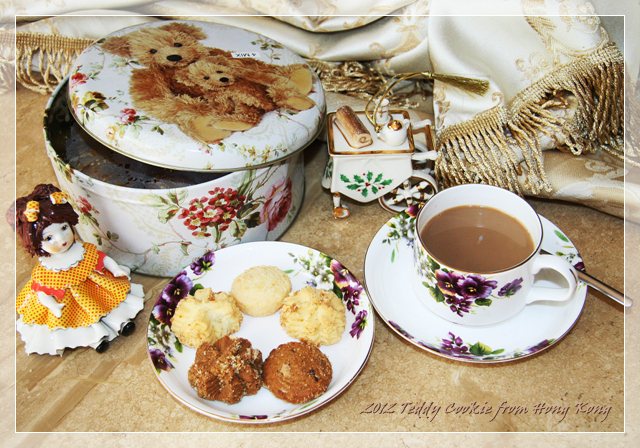
要是能配点你那小点心,就更幸福了。后來发现你那小点心还来自香港,不容易吃到的说。
回复 支持 反对

使用道具 举报

 楼主| 发表于 2013-12-11 18:32:42 | 显示全部楼层
  

Contents

Introduction
Short history of espresso
Today's espresso scene
Espresso blends
Espresso grinders
Espresso machines
Barista techniques
Dose, distribute, tamp. Repeat.
Good extraction, good espresso
Better extraction, better espresso
Diagnosis of extraction problems
Frothing milk
Pouring latte art
Cleaning and Maintenance
Resources

《 Barista Technique: Dose, Distribute, Tamp. Repeat. 》

These are the actions required to fill the portafilter with coffee and get it ready for pulling the shot.

Setting the grinder has been discussed previously, now let's look more closely at the actual grinding. Many grinders have storage for the ground coffee and provisions for dosing it. This defeats the purpose of espresso, which by definition is about doing everything fresh. So first get rid of any old grinds, then grind just enough for the shot. On espresso grinders with dosing chambers, this requires flicking the dosing lever repeatedly until the chamber is quite empty. It also means clearing out the exit chute from the grind chamber, which will otherwise clog with stale grounds, using a small brush, chopstick, or similar small non-metal implement (never your fingers!).

The nominal doses for espresso are 6 to 7 grams for a single and 12 to 14 grams for a double. Recently, many cafés have raised dose sizes to 8 to 10 grams for a single and 16 to 20 grams for a double. Whatever the dose, consistency is the key. Weighing the grinds is accurate but time consuming, so using the same volume each time is the most popular choice for dosing. The most common method is to grind for a preset time (a photo lab developing timer is a good add-on for this), filling the basket loosely with grinds, then leveling it off and discarding the excess grinds. Some baristas prefer a slightly overloaded basket. In this case, the most repeatable method is to tap the basket and portafilter a few times to slightly compact the grinds prior to leveling them off. This will add about 20% to 25% to the dose. Finally, some home baristas prefer to dose by measuring the volume of the amount of beans they put into the grinder. As a rule of thumb, a leveled coffee basket full of beans delivers the same amount of coffee as the overloaded basket technique. Which technique you use is less important than sticking with it and learning to be consistent. It's a good idea to weigh the coffee after dosing for a few days until you become fairly consistent (within 0.5 grams of the desired weight).

To create a sound puck, leveling the ground coffee is vital. Prior to tamping one wants the ground coffee distributed as follows:

Its depth even all around the basket.
Its density even all around the basket.
No gaps or breaks, especially around the perimeter of the basket.
The most common method to get this is to combine leveling with sweeping excess coffee from the basket. Prior to sweeping the grounds away, use your finger to move the grounds gently around the basket to fill in all gaps. An alternative, for those with larger palms accustomed to heat, is to press lightly on the grounds with the thumb part of the palm, and rotate both it and the portafilter to distribute them evenly. This technique is known as the Stockfleths Move (video). If you have a tamper slightly smaller than the basket, the Staub tamp, a rotating motion by it, or very lightly tamping in the four compass directions, prior to heavy tamping will also work. Finally, you can lightly level the grounds several times while filling the basket using the small tamper attached to the grinder.

Tamping means taking a cylindrical press that fits snugly into the basket and compacting the grounds prior to the shot. The object is to seal the puck so that the brew water moves through it evenly without finding weak spots. Channeling occurs when the pressurized water gushes through the weak spot while not flowing anywhere else, thereby spoiling the shot.

The classic tamp is a straight down press at 30lbs pressure, followed by a light twist to settle any stray grinds. In Italy, it has become the custom of most cafés to grind slightly finer and use a very light tamp (about 10 pounds) using the tamper mounted on the coffee grinder. Stronger baristas may use heavier tamps, while some use a nutating motion (rolling the tamper in a motion like a flipped coin settling) to accentuate the pressure towards the edges of the basket. An alternative to the nutating motion is using a convexly curved tamper, which accomplishes the same thing.

If all these alternative ways of leveling and tamping leave you bewildered, take some comfort in knowing that most experts are just as confused, and that there's help. A recent innovation known as the naked portafilter (shown above) allows you to see directly how well the extraction progresses. The naked portafilter is not the latest wrinkle in pornography, rather it is a portafilter in which the bottom has been sawed off. So, instead of being directed into a spout, the coffee exiting the sieve at the bottom of the basket drops directly into the cup. If the level and tamp are correct, the espresso will quickly collect at the center of the basket and descend as a single stream into the cup. If it is incorrect, little sprouts will squirt off in all directions making a mess. A few days with a naked portafilter will guarantee that your leveling and tamping techniques, whatever they may be, are working correctly. As a bonus, the stream off a naked portafilter is rather pretty (especially if flash photographed), the crema volume is increased, and there are no stale coffee oils from the bottom of a conventional portafilter getting into your espresso.
回复 支持 反对

使用道具 举报

发表于 2013-12-11 18:33:19 | 显示全部楼层
语婷 发表于 2013-12-11 05:22 PM
我是尚且没有对纯espresso产生感情呢。。。也不想培养啊~

但是特别喜欢加“crema”的espresso。在欧 ...

我今年都没为自己花钱。 有了小孩更不会买衣服了。现在能想到的,就只有spa. 以前没觉得需要按摩,有了小孩才感觉到这个需求。
回复 支持 反对

使用道具 举报

 楼主| 发表于 2013-12-11 18:38:35 | 显示全部楼层
本帖最后由 语婷 于 2013-12-11 04:07 PM 编辑


Contents

Introduction
Short history of espresso
Today's espresso scene
Espresso blends
Espresso grinders
Espresso machines
Barista techniques
Dose, distribute, tamp. Repeat.
Good extraction, good espresso
Better extraction, better espresso
Diagnosis of extraction problems
Frothing milk
Pouring latte art
Cleaning and Maintenance
Resources


《Barista Technique: Good Extraction, Good Espresso 》

Even very experienced baristas often don't take advantage of the opportunities to improve the espresso that are available while making the shot. They lock the portafilter into group, turn on the pump or pull the lever, and pray. If the shot is roughly right, they'll serve it and make small grinder adjustments for the next one—if it's way off, they'll dump it and make larger grinder adjustments. This approach requires that grind settings and machine temperatures and pressures be very close to perfect. However, if you know a few things about how espresso extracts, you can correct somewhat larger deviations from the correct levels of these variables on the fly. Moreover, however correct or incorrect the variables, you can assure that you're getting the best espresso possible under the circumstances.

Ending the Extraction by Color
The first aspect of working the shot is to make sure the extraction is correct by ending the shot at the same color every time. The exact color depends on blend and machine, but it is always a light tan described by experienced baristas as blonde. If the stream is still well filled with crema, it is not yet blonde. If the stream entering the cup discolors the crema into a light tan color, it's gotten lighter than blonde. Typically the right point is around the time when the stream starts changing from foam to liquid.


How and why does this work? Underextracted coffee is sour and thin; overextracted coffee is weak, with bitter and acrid notes. As the ground coffee extracts, the water flowing through it colors less and less. So the color is a measure of the degree of extraction and stopping at the same color means stopping at the same level of extraction. Perfect extraction occurs when 20% of the ground coffee's weight has dissolved into the coffee. Knowing the color that corresponds to this so you can stop the extraction means getting the best espresso for a given pull every time.

The graphic below illustrates the 'extraction space' of espresso, showing shot time and volume, the changes in color, and the effect of grind fineness. It will be used extensively in the diagnostic section, but will also help clarify the concepts discussed here.


Let's suppose the grind is way off and you don't know about this.

Based on what you've read, you are looking for a two ounce double espresso in 27 seconds. If the grind is too coarse, you get the two ounces in about 15 seconds. If you stop there, the cup will taste underextracted. If you go for 27 seconds, you'll get an overflow of overextracted bilge. But if you stop the shot at the right color, you'll have a 20 second, 3 ounce lungo (long shot)—not what you wanted, but quite drinkable. Now suppose your grind is way too fine. If you don't know the rule, you'll have a ½ ounce of intensely sour stuff at 27 seconds, or 2 ounces of intensely bitter stuff after a minute. If you do know the rule, you'll have a 1 ounce ristretto (short shot) after 35 seconds—again, not what you wanted, but enjoyable nevertheless. After you tried the shot, you can correct the grind, or even stay with the "mistake" if you decide you liked it more. In any case, you'll have a range of shot possibilities you can explore.

As can be seen on the extraction chart, it takes a longer time for the flow to go blond on a restricted volume shot than on a long volume shot. This relation between shot blonding and the volume and length of extraction is known among espresso enthusiasts as Al's Rule, named after Al Critzer of Cimballi.

Taking Advantage of the 'Rule of Thirds'
Sometimes it is not the grind, but the temperature, pressure, or even the blend itself that are off. Ideally, you would fix this by correcting the problem directly (see next section), but in many cases it takes more time that you have before rushing off to work, running errands, and so on. Another aspect of the extraction allows for a quicker fix. The early part of the extraction contains a predominance of the acids and the portion derived from fines. The central part of the extraction contains a predominance of the sugars and caramels. The final part of the extraction tends towards bitterness, but will also be fairly weak, sometimes almost tasteless. Among enthusiasts, this is known as the rule of thirds.

So, if the espresso is too sour, or worse, has the citrus peel acridity from high grown fines (a bright lingering bitterness mainly on the roof of the mouth), let the first second or two of the flow go into the drip tray. This is an old Italian barista trick for dealing with rioy Brasils, but it can also be used on gourmet blends containing a lot of acidy high grown coffees.

On the other hand, if the espresso tastes flat or bitter-dull, stop the extraction at a darker color to reduce the proportion of weak bitterish coffee, and increase the proportion of the intense flavors from early in the shot.

If the espresso is not sweet enough, you can do both by capturing the flow after a few seconds and ending while the flow is still darker. This "center-cut" shot will favor the sugars and caramels in the extraction.


回复 支持 反对

使用道具 举报

 楼主| 发表于 2013-12-11 18:47:07 | 显示全部楼层
yi_ran 发表于 2013-12-11 03:32 PM
我就用不到100刀的expresso/cappuccinos maker 做americano,照样感觉很幸福啊
要是能配点你那 ...

我觉得咱们这样就挺好,用小钱享受“尽量版”,到了真庙见了真佛时才能由衷赞美,感觉到无比地震撼!
是吧?

小点心真的是亲戚从香港背回来的。那是香港颇有名气的一家小饼店。
那小点心放在嘴里的味道和感觉,无法形容。。。和欧洲点心又不太一样。
以后去香港要专门寻!
希望我把信息都记录下来了~
回复 支持 反对

使用道具 举报

 楼主| 发表于 2013-12-11 19:06:27 | 显示全部楼层
红娘子 发表于 2013-12-11 03:33 PM
我今年都没为自己花钱。 有了小孩更不会买衣服了。现在能想到的,就只有spa. 以前没觉得需要按摩,有了 ...

baby这么小,你第一次当妈妈就能这么从容地“活下来”,已经能上光荣榜和幸运榜了呀~~
baby小时候,最好玩了!为她花钱从来不觉得多也不觉得累。。
好好玩几年,等她长大了,你也更有闲暇了,再享受自己的第二阶段自由吧?
不论怎么样,再辛苦的时候,都要记得,baby很快很快就长大了,很快很快她就再也不会在你怀里“毫无缘由”地大哭特哭,让你一夜一夜地睡不好觉了。如果她有难受,或怎样,那是她给你的礼物,让你享受作母亲的特权---谁也没说“特权”一定都要是舒服的东西啊~:-)

不提大跟班了。
小跟班小时候很好带,但也有时半夜哭,一哭40分钟的。H抱她,20分钟不到就累了,心烦地嘟囔和抱怨。他总是对我说:真令我惊奇,你力气小,但对女儿这么耐心,从不见你不耐烦。。。
我想,我也是感谢我的朋友们吧。她们的女儿都大了,总是羡慕我还有baby抱呢。

我想这就是女人天生的母性吧。
我决定好好地享受,彻底地“享受”(无论是不是享受,都去享受啊。
用这种心态甚至决心来鼓励自己是必要的,它能帮我们度过很多无助的,十分辛苦的时刻。
我们当母亲的,流着眼泪嘴里还给baby唱摇篮曲。也只有这样才不枉当一回母亲吧?

你要保重自己,还要加油好好干啊~
spa有点贵。把家里的bath tub好好利用一下吧。。。hot bath真的很救命。
我现在常背痛,一点都不好玩:-(。。你要注意抱baby的姿势。这个很重要~
回复 支持 反对

使用道具 举报

 楼主| 发表于 2013-12-11 19:10:53 | 显示全部楼层


Contents

Introduction
Short history of espresso
Today's espresso scene
Espresso blends
Espresso grinders
Espresso machines
Barista techniques
Dose, distribute, tamp. Repeat.
Good extraction, good espresso
Better extraction, better espresso
Diagnosis of extraction problems
Frothing milk
Pouring latte art
Cleaning and Maintenance
Resources

《Barista Technique: Better Extraction, Better Espresso》

The basic shot making techniques get you decent espresso, but not necessarily the best espresso. For that, you want to find which combination of pressure, temperature, grind, and finishing color works best with the blend. Also, things do go wrong—temperatures and pressures can drift, burrs get dull, machines can build up coffee oils faster than usual and require an unscheduled cleaning. Each of these mars the taste and needs to be identified. A good barista can taste an espresso and have a fairly good idea of what adjustments are required to optimize the taste. By the second or third go round of tasting and adjusting, the blend should be well dialed in. This takes experience, but here are some tips to get you started.

The bulk of this section is dedicated to extraction options since most baristas, whether pro or amateur, have little awareness of what is available to them. In fact there isn't even an agreed upon vocabulary to describe all the variations in extraction. However, before getting into extraction options, let's cover a few tips on adjusting the pressure and temperature.


Adjusting Brew Pressure
Proper espresso extraction occurs at 8 to 10 bar of pressure. The higher pressures in this range intensify the flavors.

On low end home machines the pressure cannot be set. For the type of pump in this class of espresso machines, the brew pressure is inversely proportional to the flow rate (i.e., faster flow means lower pressure, slower flow means higher pressure). In order to stay within 8 to 10 bar, you limit the extraction to a flow rate that produces 1.5 to 2 ounces in 20 to 25 seconds. On better vibration pump machines, you can set the maximal pressure via an adjustable over pressure valve (OPV, also called an expansion valve). Use a blind filter or pressure measuring portafilter and set the pressure between 8.5 and 10.5 bar. The pressure during the extraction will be roughly half a bar less for standard or ristretto shots. Rotary pumps add a constant amount of pressure to that of the mains. They are also controlled by an OPV at the pump head, and in many cases, a constant pressure valve on the suction side. Use a blind filter or pressure measuring portafilter to set the pressure exactly at the desired shot pressure.

Adjusting Brew Temperature
Proper espresso extraction occurs at 90°C to 96°C (195°F to 205°F). Lower temperatures accentuate acidic origin flavors, while higher temperatures accentuate bitter roast flavors.

Single boiler home machines with non-adjustable mechanical thermostats have their par temperature at the point the thermostat turns off the heater. You can brew at a lower temperature by flushing a few seconds of water after the heater turns off; and at a higher temperature by forcing the heat back on by turning on the steam switch for a few seconds (turn it off prior to brewing). This is somewhat hit or miss, but can be improved by calibrating the flush and steam switch time with a thermocouple thermometer.


Temperature measuring portafilter

Heat exchanger machines are set by adjusting the pressurestat, doing a sequence of eight shots or so at your normal rhythm, and seeing where the shot temperature settles. After that, you should also adjust the flush to get an idling machine to that temperature. For one-off experiments or single-shot home use, simply adjust the flush amount (see How I Stopped Worrying and Learned to Love HXs for more details).

Machines with electronically controlled brew boilers can be set from the front panel without fuss. Vapor bulb thermostats can be adjusted inside the machine. Both types should be checked with a thermocouple thermometer to confirm the actual brew temperatures.

Manipulating the Extraction Variables
You control the extraction by setting the grinder finer or coarser and ending the shot at a certain flow color, shot volume, or elapsed time. I recommend using flow color as the way of determining the end of the shot, as discussed in the previous section. Each combination of grinder setting and ending color gives a unique combination of shot time and shot volume (when using the same basket, coffee amount, blend and machine). In fact, fixing any two of the variables (grinder setting, shot color, time, and volume) fully specifies the other two.


回复 支持 反对

使用道具 举报

 楼主| 发表于 2013-12-11 19:16:59 | 显示全部楼层


Contents

Introduction
Short history of espresso
Today's espresso scene
Espresso blends
Espresso grinders
Espresso machines
Barista techniques
Dose, distribute, tamp. Repeat.
Good extraction, good espresso
Better extraction, better espresso
Diagnosis of extraction problems
Frothing milk
Pouring latte art
Cleaning and Maintenance
Resources


《Barista Technique: Diagnosis of Extraction Problems》

Espresso is mostly defined in terms of shot time and volume, since these are easiest to measure. By convention, the volume specifications for espresso are total volume, combining crema and liquid. The dwell time, the time it takes from turning on the pump to seeing the first drops of espresso emerge from the basket varies from machine to machine. So by convention, espresso extraction times are specified from the moment the pump is turned on.

I will specify the diagnostics in terms of shot ending color and volume, since these have the most intuitive correspondence to espresso taste. This means you should end the shot at the specified color, and then set the grinder to get the specified volume.

Terminology
Volume Terms:

Ristretto range: 1 ounce to 1.5 ounce doubles. Compared to normales, the taste will be more intense and sweeter. Ristrettos usually have less crema.
Normale range: 1.5 to 2 ounce doubles.
Lungo range: 2 ounce to 3 ounce doubles. Compared to normales, the taste will be slightly milder and less sweet; with certain blends, the crema on a short lungo can be better than for normales.
Color Terms:

Dark stop: stopping the shot while the flow is still foamy and brown. Compared to a normal stop with the same volume, the taste will be slightly more intense, and balanced towards acidic.
Normal stop: stopping the shot as the flow goes from foamy and brown to more watery and tan. This point marks the optimum extraction amount of 20% of the coffee solids.
Light stop: stopping the shot sometime after the flow has become watery and tan colored. Compared to a normal stop at the same volume, the taste will be slightly less intense and balanced towards bitter.
Special Terms:

Optimum crema range: exact figures are basket dependent, but generally, normal to high flow rates are best. Typically 1.33 ounces dark-stopped to 2.25 ounces normal-stopped has the highest proportion of long lasting crema. Singles cannot extract at this flow rate, so tend to have less crema.
Start dump: initial few seconds of flow out of the portafilter, which is black and without crema, is allowed to go into the drip tray. The cup is inserted only as the flow gets brown and foamy.
Center cut: a start dumped and dark stopped shot.


Diagnosing the Taste and Appearance of an Extraction

Diagnostics means tasting the espresso and correcting its deficiencies by adjusting setup or extraction parameters. In a perfect world, correcting for one deficiency would never interfere with correcting for another. In the real world, there sometimes are conflicts, and you must prioritize. The highest priority goes to gross crema deficiencies, since these indicate that some parameter of the shot is well outside proper espresso range. The next priority is taste flaws that make a shot undrinkable. Finally, with these eliminated, you can work on fine-tuning everything to get the most harmonious taste.


Gross Crema Deficiencies
Gross deficiencies in the crema point to something far out of whack and have the highest correction priority. However, the blend itself may have unusually light, dark or thin crema; so when you notice these defects, taste the shot to confirm the problem.

Too light and large bubbles: If the shot is less than 20 seconds, re-read the last section and set the grinder properly. If the shot time/volume was correct, the machine is running drastically cold and requires immediate correction. The taste will be very thin and sour.
Almost black, or a black outer ring with tiny bubbles and thin crema: If the shot took forever to produce a few drops, reread the last section and correct the grind. Otherwise the machine is running drastically hot and needs immediate correction. The taste will be very bitter and burnt.
Good color, but thin and quickly dissipating: keep the extraction in the optimum crema range, especially with dark roasts, but usually it's old beans. Rarely, it can show a defective pump not developing sufficient pressure. In this case, the taste will be balanced, but weak and with a watery mouthfeel.


Taste Flaws
These taste flaws ruin the shot. Correcting them takes precedence over working on the taste balance.

Lemon peel: This can be a blending or roasting error and irreparable. Short term, start-dump the shot. Long term, set the temperature higher and make sure the grinder burrs are sharp. This flaw comes from fines of very high quality coffees, and good blends tend to flirt with it.
Metallic: Recently cleaned machines or brand new ones can have this. The taste is eliminated most quickly by flushing more after cleaning, or for new machines, pulling a lot of shots and dumping them. Dull burrs are another cause. Finally, a failure in the water treatment resulting in almost distilled, low mineral water will cause this.
12 hours on the hot plate taste: Time to backflush and clean the portafilter. Verify the frequency of your cleaning schedule.
Instant coffee taste: The mark of overextraction. Grind coarser and stop darker, so volume stays the same. If the bitter taste is prickly-sharp rather than dull, also lower the temperature.
Thin and sourish: The mark of underextraction. Grind finer and stop lighter, so the volume stays the same. If the taste is extremely sour, also raise the temperature.
Salt or MSG: A common defect in Indonesian or slower roasted coffees, and difficult to correct. It is ameliorated by high crema content and sweet, ristretto shots, so dial-in exactly to 1.5 ounce, normal-stop color shots. If that fails, also start-dump, since the taste is slightly more concentrated there. Finally, strong flavors, particularly acidic ones, can cover the salt taste. Consider lowering the temperature to enhance these, if the blend's flavor balance permits. The best solution is to find higher quality Indonesians for the blend and/or speed up the roast finish.
Ashiness: Usually a flaw in rapidly dark roasted, low grown coffees. Drop the temperature to the low end of the espresso range. Dial in to the lungo end of the optimum crema range and dark stop the shot (you may be under 20 seconds when you do this, that's OK). These measures will not much reduce the ashiness, but will mask the problem with a little more brightness and crema. The real solution is to change blend.
Rubber or Iodine: Buying cheap coffee? This is the classic reason for start-dumping.
Sewage, decay, mold, sausage or cabbage smells: This is from badly fermented coffee. If the blend is normally good, it's from a stinker bean. Clean out the doser and burrs. If it keeps happening, there's nothing you can do except get new coffee. The importer slipped the roaster a bum bag, and the problem has to be resolved there.


Unbalanced Taste
When the crema is right and the shot has no taste flaws, you can fine-tune the setup and extraction to provide the most harmonious and balanced taste possible. Although everyone wants balanced taste, the exact combination of sweet, bitter and sours tastes that any person considers balanced is extremely variable. So these adjustments will be subjective; and there may be more than one optimum set up for the blend, especially if it is complex in taste.

Not sweet enough: Do more ristretto shots, grinding finer and stopping at the same color. This will take the shot out of the optimum crema range, so it has to be a good crema blend. You can also center cut the shots, however, this will reduce the distinctive flavors and can lead to blandness. On the other hand, somewhat bland center cut shots are good way to serve newcomers to straight espresso; or those who prefer more subtle flavors.
Over-intense flavors: Lower the pump pressure. If this is because there's not enough sweetness to balance the bitters and sours, use the previous fix. Also consider going more lungo with the same stop color.
Pallid Flavors: Raise the pressure. Also consider going more ristretto with the same stop color.
Overly sour: Raise the temperature. Short term, trying stopping lighter and grinding finer to keep the volume the same. If it's really bad, start-dump.
Overly bitter: Lower the temperature. Short term, try stopping darker and coarsening the grind to keep the volume the same.


Pursuing the Godshot
If you've never tasted great espresso, you may have read the last section and asked yourself how you can do all the diagnostics. You have good taste, otherwise I can hardly imagine how you've read this far. Good espresso isn't a punch in the mouth, but tastes wonderful. Expect that, trust your taste and judgment, and make the adjustments accordingly. Then taste the results. You'll improve very quickly.

To further develop that taste, it greatly helps to sample top flight espresso and get a feel for all its possibilities. Take every opportunity to visit good cafés and roasters, and try their espresso and blends. Ask the coffee people there what you are tasting and how to tell if it's right. Don't worry about getting bad information—it's a lot easier to recognize a good coffee person than a good coffee because their enthusiasm gives them away.


You can go further by drinking top flight estate coffees brewed regularly and learning how the coffees from different places in the world vary. In comparison to wine and other gourmet items, coffee is the most economical of the truly great taste experiences. Deepen your appreciation even further by home roasting you own coffees and blending them for espresso, or taking part at tastings conducted by roasters.

There is a large variety of espresso equipment, and it's useful to know something of the possibilities. These are discussed in great detail on the coffee Internet sites (see the resources and the rest of this site). If this interests you, participate in these discussions. There are frequent get-togethers that are organized via these sites, so you will also get some hands on experience.

Espresso is a social world. If you want to turn this into a serious hobby, join the Specialty Coffee Association of America (SCAA), attend conventions and barista competitions, get to know others like yourself, as well as the stars of the business. If you like espresso and coffee, I guarantee you'll enjoy the activity and like the people you meet.

Finally, coffee is a big global business. It encompasses large numbers of very poor farmers whose livelihoods are frequently in the balance, a few very big businesses buying from them cheap and cutting quality, a mass public that doesn't know much about coffee except that it's a pick-me-up, and a group of enthusiastic drinkers and purveyors who love coffee. As enthusiasts, it's incumbent on us to convey to others how rewarding good coffee can be. If we don't understand the coffee trade and its issues, and if we don't foster a wider appreciation of good coffee, many farmers will suffer, some of the world's great coffees may disappear, and we will all be the poorer for it.


回复 支持 反对

使用道具 举报

 楼主| 发表于 2013-12-11 19:25:13 | 显示全部楼层
本帖最后由 语婷 于 2013-12-11 04:35 PM 编辑


Contents

Introduction
Short history of espresso
Today's espresso scene
Espresso blends
Espresso grinders
Espresso machines
Barista techniques
Dose, distribute, tamp. Repeat.
Good extraction, good espresso
Better extraction, better espresso
Diagnosis of extraction problems
Frothing milk
Pouring latte art
Cleaning and Maintenance
Resources


《Barista Technique: Frothing Milk》

Milk drinks are only a small part of Italian espresso culture; whereas in most of the US, people have oversized milk drinks that even an anthropologist would never classify as cultured. But in a few cafés around the world, baristas are using milk as a paint and espresso as a canvas to create beautiful and wonderful tasting latte art.

The best and most practiced professional baristas can create quite stunning patterns that a home barista will not be able to emulate. But with some months practice, you can learn to properly froth the milk, and pour basic heart and rosette patterns in 6 or 12 ounce cups. There is no easier way of convincing your friends of your espresso expertise than casually serving them an artfully poured latte.

Correctly frothed milk = microfoam = wonderful cappuccinos
Proper cappuccinos and lattes require microfoam—a pourable, virtually liquid foam that tastes sweet and rich. The pouring consistency runs from completely liquid for latte art to a slightly thickened sauce for traditional cappuccinos. If the foam becomes thicker, like soft peak beaten egg whites, its taste turns to cardboard, and its appearance in the cup suffers. Microfoam in the pitcher does not look like a foam, since the bubbles are too small. The only distinction it has from liquid milk is a soft, slightly spectral sheen in the right light. If the frothed milk has visible foam, it was incorrectly prepared. The picture below shows a bad foam (left) and a slightly thick microfoam suitable for cappuccinos (right).


--------------------------------------------------------------------------------


Contrasting texture of poorly frothed milk (left) and properly frothed microfoam (right)


--------------------------------------------------------------------------------


Frothing milk to a microfoam is very simple when you know how to do it, but it does take time to learn. Two processes occur when milk is frothed: first, when the tip is at the right depth, the milk is converted to microfoam; second, the milk is heated. These two do not happen at the same rate on every machine or tip design, so the point at which you transition from foaming the milk to simply heating it varies from machine to machine. Finally, the amount of steam varies from machine to machine too, so the time spent to heat enough milk for a six ounce cappuccino can go from 10 to 40 seconds.

Four things to learn
Where to put the tip: There are three zones distinguished by sound. In the first zone nearest the surface, the tip makes a bubbling noise and as it gets slightly deeper, a sucking or tearing noise. In the second intermediate zone, there is very little noise. In third zone near the bottom of the pitcher, the milk begins to roar loudly.

The tip should stay in the second, silent zone for the entire process. In order to create microfoam, position the tip at the top boundary, so you occasionally hear a sucking/tearing noise. Too much of the sucking/tearing noise and the foam will stiffen and not be micro enough. To just heat the milk after the foaming is done, position the tip near the lower boundary so you occasionally hear a roaring noise.

The milk in the pitcher should whirlpool or form a standing wave of turbulence in order to fold foam into liquid. With a one hole tip, angle the entry, and keep it close to the edge of the pitcher to rotate the milk into a whirlpool. With a multi-hole tip, point it straight down and keep it near the center of the pitcher—the hole dispersion pattern on a properly designed tip will create a whirlpool or a standing wave of turbulence for you. If your multi-hole tip does not do this, change it for another, or block some holes and convert it to slower, single hole use.

How long to foam: As the liquid turns to foam, the volume of the milk increases. This is called stretching. Keep foaming until the milk has gone up about 50% in volume. If you foam more than that, you will get a light microfoam for the classic cap-on-top cappuccino, but latte art will be impossible. Typically, the side of the pitcher will be lukewarm (40°C, 100°F) at this point. However, volume increase is a far more reliable indicator, and with some frothing setups, one even keeps the tip at the foaming point until the milk is fully heated.

How much longer to heat the milk: The milk should be heated to about 70°C (160°F), which is just below the point where protein curdles and the foam is destroyed. The easiest way to do this is to hold one hand on the side of the pitcher and stop when it gets uncomfortably hot. If the milk suddenly increases in volume, the proteins are curdling, and you've gotten it too hot. With experience and a slower frother, you can hold the pitcher by the side rather than the handle and have your other hand free (it also helps to have a higher pain threshold!).
回复 支持 反对

使用道具 举报

 楼主| 发表于 2013-12-11 19:46:19 | 显示全部楼层
本帖最后由 语婷 于 2013-12-11 04:54 PM 编辑

这个很重要:
Steps to pouring latte art
The prevailing usage calls a drink of any size with latte art patterns a latte. If a drink of any size with a shallow cap of soft foam on top is called a cappuccino. A drink with a hard foam cap is called ruined. The exception is the macchiatto, which is a ristretto espresso with about one ounce of milk either in cappuccino or latte art form, depending on your wish, and the barista's whim or skill. Good cafés will not serve anything in larger than a twelve ounce cup. I and most purists frown on any milk drink larger than six ounces.


Contents

Introduction
Short history of espresso
Today's espresso scene
Espresso blends
Espresso grinders
Espresso machines
Barista techniques
Dose, distribute, tamp. Repeat.
Good extraction, good espresso
Better extraction, better espresso
Diagnosis of extraction problems
Frothing milk
Pouring latte art
Cleaning and Maintenance
Resources


《Barista Technique: Pouring Latte Art 》

If you followed the instruction on the previous page, the milk will initially be very liquid and will hardly mark the surface of the espresso. After about 10 to 20 seconds, it will thicken to the right point for well defined latte art. After about 20 to 25 seconds, you can pour something with blurry shapes, a middle thing between a cappuccino and latte art. After that, a simple round cappuccino foam cap will form. Swirl the mug a few times and rap it gently against the counter just after frothing and just before pouring.

On a single boiler home machine, some people prefer to froth first and then make the espresso. In this case the milk will stand about one minute. In order to keep the foam capable of latte art, reduce the initial stretch to about 33% and frequently swirl the pitcher while you wait.

Steps to pouring latte art
The prevailing usage calls a drink of any size with latte art patterns a latte. If a drink of any size with a shallow cap of soft foam on top is called a cappuccino. A drink with a hard foam cap is called ruined. The exception is the macchiatto, which is a ristretto espresso with about one ounce of milk either in cappuccino or latte art form, depending on your wish, and the barista's whim or skill. Good cafés will not serve anything in larger than a twelve ounce cup. I and most purists frown on any milk drink larger than six ounces.

If you are pouring a cappuccino, let the frothed milk rest for 30 seconds prior to pouring. A cap of soft foam will form automatically. The softness of the foam cap is a check on how well you've microfrothed. Do not attempt latte art until you get the soft foam cappuccinos, since this confirms that you are frothing correctly.

Below are the steps to pouring latte art:

Turn the handle of the cup to the left and turn the saucer away from you if it has lettering. The setup should be facing the person being served.
Let the frothed milk sit 10 to 20 seconds.
Tilt the cup towards yourself until it is close to spilling. The more the tilt, the more quickly the milk will mark the surface (rather than sinking out of sight).
Slowly start pouring the milk at the lower end (closer to you) until you see a cloud of white billowing up.
For a heart, move the pour towards the center, and oscillate it side to side.
For a rosette, move the pour to the far end and zig zag it towards your end.
End the pour with a very light stroke away from you to the far end of the cup.
As you pour the milk, level (untilt) the cup smoothly so nothing spills.

--------------------------------------------------------------------------------


The rosetta in a cappuccino (left) and macchiatto (right)


--------------------------------------------------------------------------------


All this sounds easy, but requires constant practice. If you are a natural, it will take a few weeks, otherwise a few months. Larger drinks are easier to pour than smaller ones. My conservative advice is to pour only drinks you consume or serve, and let your expertise grow gradually. If you are in a hurry, buy a few gallons of milk, a lot of coffee, and just churn out lattes till you have it down pat. Getting a coach who knows how to do this, or watching some of the videos, will help a lot.
回复 支持 反对

使用道具 举报

 楼主| 发表于 2013-12-11 19:48:01 | 显示全部楼层
  

Contents

Introduction
Short history of espresso
Today's espresso scene
Espresso blends
Espresso grinders
Espresso machines
Barista techniques
Dose, distribute, tamp. Repeat.
Good extraction, good espresso
Better extraction, better espresso
Diagnosis of extraction problems
Frothing milk
Pouring latte art
Cleaning and Maintenance
Resources

《Espresso Machine Cleaning and Maintenance》


Some people behind the counters in cafés are not even allowed to adjust their grinders, let alone maintain their machines. They learn so little about espresso that they will be replaced by automatic push-button machines. Professional or home baristas who pride themselves on their espresso should know enough about espresso machines to keep them in good condition.

Cleaning
Each time you make an espresso, coffee grounds get on the screen and rubber gasket in the group. Some people recommend the "portafilter wriggle," that is, running water and wriggling the empty portafilter between shots to take care of this. However, this will not prevent gunk from accumulating on the gasket. Use a grouphead brush regularly (preferably after every shot, but minimally once a day for home use) to clean the group gasket.

Brewed coffee diffuses up the water path into the group during the extraction process. With time, the coffee oils accumulate and impart a stale coffee taste (a prickling on the palate) to every shot. Backflushing the machine removes this buildup. This is done by inserting a blind basket (a basket with no holes) into the portafilter, adding a teaspoon full of espresso machine detergent and running the pump for fifteen to twenty seconds. Typically this is repeated about five times without adding new detergent, followed by five plain water backflushes to rinse. Some people claim that just using a plain water backflush without detergent more frequently achieves the same goal. I have not found this to be true, and since coffee oils are insoluble in plain water, I see no reason why it should be. For home use, backflushing every two weeks or so is sufficient, while a café needs to do it nightly.


Backflushing only works on machines with a 3-way exhaust valve (these whoosh at the end of the shot and release the pressurized water remaining in the group into the drip tray). Smaller home machines do not have these. Such machines can be cleaned by placing a detergent such as CleanCaf in the tank and running it through the entire machine. Afterwards, the machine is rinsed by running lots of clean water through it.

Coffee oils also accumulate on portafilters, especially in the spout. You should let them soak overnight in a bowl filled with water and a table spoon of backflush detergent. Cafés do this every night, but once every week or two is enough for home usage.

Grinders should be cleaned by disassembling the burrs and blowing out the grind chamber with compressed air or a shop vac. When using compressed air, it helps to work with a plastic bag over the top the grinder since a lot of coffee flies around. Once a year, grind through some white rice to clear out the coffee oils accumulating on the burrs. After doing this, grind through some sacrificial coffee to clear out the rice powder.

Maintenance
As the owner of a home machine, you should be able to change out the group gasket and screen, fix minor leaks and electrical glitches, and flush and descale the machine. However, the details of this are machine dependent. Refer to your owner's manual, the links in this article, and the resource section on this site.
回复 支持 反对

使用道具 举报

 楼主| 发表于 2013-12-11 19:51:06 | 显示全部楼层

Contents

Introduction
Short history of espresso
Today's espresso scene
Espresso blends
Espresso grinders
Espresso machines
Barista techniques
Dose, distribute, tamp. Repeat.
Good extraction, good espresso
Better extraction, better espresso
Diagnosis of extraction problems
Frothing milk
Pouring latte art
Cleaning and Maintenance
Resources


《Conclusion and Resources》   


Throughout this piece, I urge people to talk to coffee professionals and other hobbyists, to try the famous espresso blends and cafés, and even to home roast, cup and blend for themselves. Ten years ago this would have been virtually impossible; five years ago, difficult. But since then the coffee Internet has exploded. It has put coffee enthusiasts from all around the world in touch with each other, circulated new knowledge more widely and more rapidly than ever before, and created a market large enough so several Internet vendors specializing in coffee related wares can make a living and provide us with a dizzying selection of state of the art items. The Internet has created a golden age for hobbyists in general, and for coffee hobbyists in particular.

There are thousands of coffee related sites. Here is a very short list of some of the major ones, as well as some of my favorites, organized by type.

Information and Review Sites
Coffee FAQ: Everything you ever wanted know in a handy format. Thanks Scott
CoffeeGeek: Espresso Wunderkind, Mark Prince; features equipment reviews and many more consumer reviews
Home-Barista.com (this site): High-end espresso equipment reviews for the home market and how to's
Coffee Review: Ken David's, the popularizer of homeroasting, monthly reviews of roast coffees
CoffeeCuppers.com: Jim Schulman's and Bob Yellin's expert green coffee reviews
Coffee History: Mommy, why are those goats dancing?
HV's Comprehensive Coffee Links: You wanted more links?
Espresso Italiano: If you want the official Italian, and quite poetic definition of espresso
The Coffee Research Organization: a useful information website on coffee basics including espresso
Water FAQ: not really up to this standard; but I wrote it, so it's in.
Newsgroups and Forums
Alt.coffee: the first Internet coffee hangout. web access via Google
CoffeeGeek Forums: Only a few years old, but closing fast.
Home-Barista.com Forums: New kid on the block, but worth checking out (especially if you wish to comment on or offer corrections for this article).
Roasters and cafés
Riley's Coffee and Fudge: Barry Jarrett, the owner, is the first pro who took notice of people talking coffee on the Internet. So Riley's is hereby named the official café/roaster of the Coffee-Internet. Also, June's fudges are so good, they might start an Internet of their own
Intelligentsia: In my hometown, Chicago. Great coffee, great people
Gillies: New York's Don Schoenholt is one of the founders of specialty coffee, and a great supporter of coffee enthusiasts
Dallis Brothers: Gillies NYC competitors, also terrific people
Gimme Coffee: There's good coffee descriptions, there's bad coffee descriptions, then there's Gimme's descriptions. But the educational material is solid enough for a banker
Counter Culture Coffee: Real espresso in the Old South? You bet. Another great supporter of us enthusiasts
Hines Public Market: Seattle Haut café. Seattle is the center of North American coffee culture
Zoka: More Seattle
Café Victrola: More Seattle
Caffé D'Arte: You guessed it
Espresso Vivace: Last but not least Seattle. There's lot's more, but I'm tired of typing Seattle
Stumptown: In Portland; one of the best in North America
Supreme Bean: LA's roaster to the stars; nevertheless, their espresso blends are great.
Home Roasting and Green Coffee
Sweet Maria's: Not just a vendor; but the Free University of home roasting too.
Coffee Bean Corral: Russ sits on a Hawaian porch sipping coffees. The ones that fit, he sells.
Coffee Wholesalers: Chuck is a roaster who sells some of his stock green, and occasionally makes neat gizmos for home roasters
Coffee Project: James' list is available to home roasters
Green Coffee Coop: 5lb minimum lots at coop prices, vetted by Bob Yellin, the best amateur cupper I know.
Internet Coffee Equipment Vendors
Whole Latte Love: One of the original Internet home coffee equipment vendors
1st-line equipment: The other original
Chris' Coffee Service: A commercial coffee equipment retailer who also sells high-end home equipment
Personal Websites and Blogs
Bread, Coffee, Yoga, and Chocolate: if there's a role model for coffee enthusiasts, it's Fortune
Espresso! My Espresso: The ultimate love story: boy meets espresso machine ... But seriously, Randy's site has tons of solid info on everything an espresso lover wants to know
God Shot: Chris Tacy's blog. He is a "3rd wave" barista: a taster, a roaster, and an officer of the Barista Guild of America.
Professional Associations
SCAA: Specialty Coffee Association of America. The industry group for real coffee. Join as a consumer-member
NCA: National Coffee Association. The enemy. Industry group for Folgers, etc.
Barista Guild of America: A new association formed by enthusiastic and knowledgeable professional baristas
Roasters Guild: The association for professional craft roasters.


回复 支持 反对

使用道具 举报

 楼主| 发表于 2013-12-11 20:06:02 | 显示全部楼层
《小细节,大学问》


了解了这些有关espresso的知识后,
我们可以变成:

(1)Coffee barista
(2)制作espresso/capuccino/latte的高手
(3)望而却步,庆幸自己不是coffee lover
(4)更加敬仰coffee文化和艺术,对自己在咖啡店里巨资买的drink们,更加珍惜和感恩~

我想我就选择第四吧~


小爱好,大享受
回复 支持 反对

使用道具 举报

发表于 2013-12-11 20:23:26 | 显示全部楼层
你那么多的漂亮餐具放哪里呀?我也喜欢它们,可我只放得下一套节日用餐具外加一套茶具。其他都是日常用餐具把厨位占了。
回复 支持 反对

使用道具 举报

发表于 2013-12-11 20:33:10 | 显示全部楼层
语婷,你的心态真好,总会往好处想。

不过我也是觉得自己要回去上班了,所以也任由她在我怀里睡觉。结果当然是我没得觉睡,也运动不成。

上次看到受伤的婴儿被扔在垃圾箱边上冻死的新闻,搞得我哭了好久的鼻子。真实感受了做妈妈的心情了。

也许回去工作时耐心也会多一些吧。希望如此啦。

你真是小站一景。
回复 支持 反对

使用道具 举报

发表于 2013-12-11 23:33:34 | 显示全部楼层
语婷 发表于 2013-12-8 04:01 AM
《节日采购单----陆上部分----彩色单(图片版》

呵呵,发现你真是个“色鬼”,那么多颜色。
回复 支持 反对

使用道具 举报

 楼主| 发表于 2013-12-12 00:35:41 | 显示全部楼层
漫人 发表于 2013-12-11 08:33 PM
呵呵,发现你真是个“色鬼”,那么多颜色。

那你肯定是“色盲”。。。认识我这么久了才发现~
交友不慎吗?
回复 支持 反对

使用道具 举报

 楼主| 发表于 2013-12-12 01:00:36 | 显示全部楼层
本帖最后由 语婷 于 2013-12-11 10:11 PM 编辑
红娘子 发表于 2013-12-11 05:23 PM
你那么多的漂亮餐具放哪里呀?我也喜欢它们,可我只放得下一套节日用餐具外加一套茶具。其他都是日常用餐具 ...


嘿嘿嘿嘿~~~
先傻笑几声过过瘾。
太高兴有人和我聊我喜欢的东西了~~~!

先给你讲个在Q大舞蹈队里流传的有关这个问题的“笑话”:舞蹈队的美女们第一次来我家聚会时,都对我那些漂亮的盘盘碗碗叹为观止的。我在厨房忙,她们就问陪着聊天的H: 你家的这些餐具是都很漂亮,但是占据了这么多空间,那你家平时吃饭用的餐具放哪儿啦?H指指玻璃壁橱里的那些“展品”说,这些就是我家平时吃饭的餐具啊。

我家厨房有很多玻璃门柜橱,因为我喜欢玩餐具,这些玻璃门对我很重要,让我可以很方便地看到进而决定哪餐饭用哪套的餐具,而不用开好几个门查看才找到。(有些朋友说不喜欢玻璃门,因为“谁家没有些见不得人的杂物啊?”。。。但是我不觉得这是个问题,此处就先不提了。)这样的话,在我方便拿到的高度内,我可以放6套不同的餐具,这些都是我平时常用的。不常用的餐具和节日用的餐具,我都放在下面的柜子里,“存放”了。我每年一月一日前后会更新这6套常用的餐具----决定下一年哪些套“常用”,算是rotate。

我家大餐桌旁边的玻璃碗盘柜里有9个隔间,理应能放9套不同的茶具。(我没有用这个空间摆放一套节日用餐具,感觉那样太boring,没什么好看的,太浪费有限的空间了。。:-( 我选择用这些空间来展示我喜欢的茶具和小东西,说实话,这些“展品”的欣赏者是我自己。我是个只顾自己玩,不考虑别人更不考虑客人的那种人~他们一年才来我家几次啊?我才不在乎他们喜欢不喜欢,怎么想~

你看,这样我不就有很多空间来放自己的“玩意儿”了吗?
除此之外,我还有很多其它空间呢~~
(给你贴几张图看吧?和我一起玩一玩。。。

(下面这张图的背景柜子是我文中没有提到的“空间”,柜子的玻璃反射的那些是我提到的,摆放平时常用餐具的“空间”:-D)


(下面这两张是餐桌旁玻璃柜橱里的隔间之一二。。。这样就可以放不同风格的小东西了嘛~~)


(在我没提到的“空间”之一玻璃柜橱里,就是鸭子和鹅背景的柜橱里,我就这样摆我的小酒具,还有故事情节呢~ 这些摆设现在已经不是那样了,反正我没事的时候就会重新组合故事和给它们换地方。)


(在另些没有提到的“空间”里,还有些不同的东西:)我玩得比较过头了,很多照片都不好意思放出来给别人看了。。。


回复 支持 反对

使用道具 举报

 楼主| 发表于 2013-12-12 01:37:21 | 显示全部楼层
本帖最后由 语婷 于 2013-12-11 10:38 PM 编辑
红娘子 发表于 2013-12-11 05:23 PM
你那么多的漂亮餐具放哪里呀?我也喜欢它们,可我只放得下一套节日用餐具外加一套茶具。其他都是日常用餐具 ...


和你先聊痛快了,过了瘾。。
这时再说几句“过来人”的话:

(1)空间是需要善用的,但各家有各家的条件和爱好,就不用我罗嗦了。
(2)买餐具套,我分享些心得:

年轻的时候爱玩,也爱聚朋友,我有一套10人的节日餐具(国内的新式青花瓷),两套8人的(一个红与黑中式套,一个英国青花瓷风景套)。几个6人套的都是我平时常用的。我现在觉得有点多。如果你已经有一套结婚礼物很棒的节日餐具了,那么“节日餐具类”也许就够了。其它套都可以零星买,每种4件套。----这样你家3个人,足够用,还有一个是备份,万一有损坏还不至于破了套;而且不同的4件套可以混搭用或联合用:如果有8个人吃饭,可以用两个相配的4件套组合:男生用一套,女生用一套。混搭可以增添乐趣,不会太单调。

茶具也是的。有一套全点的大点的正式点的就行了,其它的茶套。。。如果为了多品种而少占地,就可以两件套或四件套地买,不要买再大套的了~但这有时不容易,很多茶套都是六个一套八个一套的。:-D


(下图里那套,我现在已经找到更相配的中式红碗了~~:-)


回复 支持 反对

使用道具 举报

 楼主| 发表于 2013-12-12 01:47:39 | 显示全部楼层
红娘子 发表于 2013-12-11 05:33 PM
语婷,你的心态真好,总会往好处想。

不过我也是觉得自己要回去上班了,所以也任由她在我怀里睡觉。结果当 ...

不好意思。。。都唠叨出景象了?

能理解,我也是。我本来心就软,当了妈以后更甚了,很多坏事都不能听,不能看,不忍读,不堪想象~ 心理异常“脆弱”啊。

但我也不真的以此脆弱为辱没,女人就是女人,母性就是母性,心变柔软变脆弱也是因为有了女儿吧~
有时候听新闻,听了前面可以想象到后面,我会马上关掉收音机或电视的。有时候H会说:今天新闻里有件事,妈妈和孩子。。。被孩儿他爸。。。我马上会说:够了够了知道了~~No Details Please~~ 不然俺跟你急。。。H虽然意犹未尽,但看看我认真他也只好忍着下半句。。
回复 支持 反对

使用道具 举报

 楼主| 发表于 2013-12-12 01:52:40 | 显示全部楼层
本帖最后由 语婷 于 2013-12-11 10:54 PM 编辑

今晚有几个projects:

红烧兔子肉。豆子最喜欢兔肉了,我们这里很容易买到兔子肉,做来替豆豆吃~

炖了乌鸡沙参汤

腌制了做熏鸡翅的34只翅膀

还需要做32个圣诞卡片,配我的礼物,周五发放给同事们-----每个同事都有份,感谢他们在过去一年里给我的友爱合作和好心情~~~


《感谢同事给我的好心情~》


回复 支持 反对

使用道具 举报

 楼主| 发表于 2013-12-12 03:50:02 | 显示全部楼层
《圣诞节的声音》

圣诞节有自己特殊的声音。
是圣诞老人的马鹿铃声吗?是孩子们的圣诞颂歌吗?还是厨房里热闹的杯盘叮当响?
这些都是的。
但除此之外还有一种声音最令我心动,那就是UPS或FedEx货车在门前刹车又启动的轰轰声。

司机们静悄悄地来,有时连门铃都不按响,留下包裹后又静悄悄离开。我能在圣诞歌声和厨房的热闹杂音中听到的,唯有那货车刹车又启动的轰鸣。

它就是之前的盼望,它就是圣诞老人的马鹿铃声,它就是圣诞颂歌,是爱与被爱,是快乐。
它就是圣诞节的声音!


我喜欢听这个特殊的节日之声,喜欢看这些黑色或白色的大货车从社区安静的街巷中穿行,喜欢看到它停在我邻里的门前,也曾经盼望过它早一天停在我门前。

每一个UPS或FedEx货车都是一辆圣诞马鹿车。。
回复 支持 反对

使用道具 举报

发表于 2013-12-12 12:05:25 | 显示全部楼层
看来是:旧的不去,新的不来。
他搬进来时已经捐了不少东西,但还是有很多重复的。像我们有两套不粘锅,打算把我的一套捐出去。这样我可以进新锅啦。

我想进个不锈钢炒菜锅 -- 不管贵贱,所有的不粘锅都被我一年内搞得伤痕累累。这回买个贵的不锈钢锅试试。
再进个Dutch Oven -- Enameled Cast Iron。
妈妈要给我扛个蒸锅,我要的是蒸笼--所以又多一个锅。
餐具我有一套可以捐,很久没有用了。
橱柜的第三层我勉强够得着,有潜力开发。
这下我也可以过家家啦。

点评

http://www.amazon.com/Cook-Home-NC-00313-Steamer-Stainless/dp/B00DHH0LZM/ref=sr_1_9?ie=UTF8&qid=1386869042&sr=8-9&keywords=steam+pot  发表于 2013-12-12 12:26 PM
不知道你要的是什么样的蒸笼。这里买的这类不锈钢蒸锅也挺好,还省得那么远带来。  发表于 2013-12-12 12:26 PM
回复 支持 反对

使用道具 举报

发表于 2013-12-12 12:10:07 | 显示全部楼层
我以为你的房子不大呢,橱橱柜柜的真不少。你很有搭配摆设,这点要向你学习。
我现在一个柜子也没有,本来想在餐厅搞一个来着,现在给我摆小孩的东西了。Swing, bassinet, playmat.
也许等她大一点再进?
回复 支持 反对

使用道具 举报

您需要登录后才可以回帖 登录 | 注册

本版积分规则

手机版|天涯小站

GMT-5, 2026-6-21 06:15 AM

Powered by Discuz! X3.4

© 2001-2017 Comsenz Inc.

快速回复 返回顶部 返回列表